
【高雄市】Kaohsiung City Guide
This post contains affiliate links, meaning EVERLASTYING will earn a commission if you purchase through our link at no extra cost.
Read my disclosure for more information. I appreciate your support 🤍
Seafood lovers, sunshine chasers, and street art fans — this one’s for you.
Kaohsiung is where tropical vibes meet industrial-cool energy. It’s Taiwan’s second-largest city, but it feels more like a chill cousin to Taipei — with ocean breezes, open spaces, and a serious glow-up in recent years.
I actually lived in Kaohsiung for 2 years during elementary school (tiny me with a bowl cut 🍚), so coming back as an adult felt like time-travel. The city’s transformed: sleek, creative, full of art, yet still rooted in its salty-sweet charm. Walking through Pier-2 Art Center or eating papaya milk at a night market hits different when you’ve got childhood flashbacks on every corner.
Whether you’re planning a 1 - 3 day stop or thinking of a deeper dive, this city’s gonna surprise you.
In this guide, I’ll show you some can’t-miss eats, what to do, how to get around, and where to stay.
get to know Kaohsiung
From ancient roots to industrial boomtown, this city’s had a glow-up like no other.
Kaohsiung’s story starts waaay back — like 6,000 years ago — when early human settlements were found in the surrounding hills, harbor, and area. But the city as we know it really began with Taiwan’s Indigenous people.
Originally called Takau (also spelled Takow or Takao), the name comes from the Makatao and Siraya tribes, Taiwan’s Indigenous peoples. In their language, Takau meant “bamboo forest.” When Ming Dynasty explorers arrived, they interpreted it as 大狗嶼 (“big dog islet”), which… is definitely not the same meaning. 😂
🚢 A quick timeline of Kaohsiung’s past
1624 – Dutch Colonial Era
After being pushed out of Penghu, the Dutch East India Company set up shop in southern Taiwan. Takau became a key fishing and trading port.
1630 – First Major Han Chinese Migration
Merchants from Fujian fled famine and political chaos in China, either negotiating with the Dutch or hiding in Indigenous villages.
1684 – Qing Dynasty Takes Over
Taiwan is annexed and the area is renamed Fongshan County (鳳山縣). The harbor continues to grow in importance.
1895 – Japanese Colonial Period Begins
Taiwan is ceded to Japan. In the 1920s, the 8th Governor-General Den Kenjirō renamed the city 高雄市 (Takao-shi in Japanese), preserving the Indigenous name but giving it a new urban identity.
Under Japanese rule, Kaohsiung exploded into an industrial powerhouse:
🛤️ Railroads
⚓ Shipyards
🏭 Refineries and cement factories
… all centered around the harbor.
WWII – Destruction & Rebirth
Kaohsiung became a major base for Japan’s military campaigns in Southeast Asia. It was heavily bombed in 1944 – 1945 by U.S. forces, especially around the port area.
1945 Onward – Modern Kaohsiung
After Japan’s surrender, Taiwan was handed over to the Republic of China. Kaohsiung rebuilt fast—its harbor bouncing back stronger than ever.
Today, Kaohsiung has transformed from a major port city into one of Taiwan’s most creative and laid-back destinations — home to the energetic Pier-2 Art Center, busy night markets, and a growing arts and indie scene set against a backdrop of beaches, mountains, and lotus ponds.
Kaohsiung City map
best time to visit
BEST OVERALL: Late winter to spring (Feb–Apr)
PEAK SEASON: November - April
🌧️ TYPHOON WATCH: Summer to fall (July - November)
Fall (October – November)
Still warm, but typhoon season can roll in. Weather can flip pretty quickly, so keep plans flexible.
Winter (December – February)
The best time to visit! Mild, a little breezy, and honestly kinda perfect. Light jacket weather — great for exploring without melting.
Spring (March – April)
Warm, comfortable, fewer weather surprises. Probably the perfect time if you want sunshine without the extreme humidity.
Summer (May – September)
Hot, humid, sweaty. Beach vibes are great, city exploring… less fun unless you love tropical heat. Beware of showering at least 3-4 times a day due to the humidity!
getting around

Kaohsiung’s LRT
Light Rail Transit (LRT)
Kaohsiung’s newest Light Rail loop is honestly one of the nicest ways to explore the city. It stops near every major attraction, waterfront areas, and art districts — perfect for casual sightseeing. You can tap in with an EasyCard or iPASS, so getting around is super easy.
MRT
MRT, also known as Mass Rapid Transit, is a fast, clean, air-conditioned metro. This is your best way to move efficiently across the city without breaking the bank, and great news, EasyCard and iPass work here as well!
YouBike
Kaohsiung is surprisingly bike-friendly. Grab a YouBike with your EasyCard and cruise along the harbor, parks, or city streets at your own pace — super fun and budget-friendly.
Kaohsiung tours you'll love
where to dine
🃏 Bar Doorlight
⏰ Daily 8:00 PM – 2:00 AM (Fri & Sat until 3:00 AM) | 💰 $$ | 💳 Card accepted | 📍 No. 2, Lane 40, Sanduo 4th Rd, Lingya District
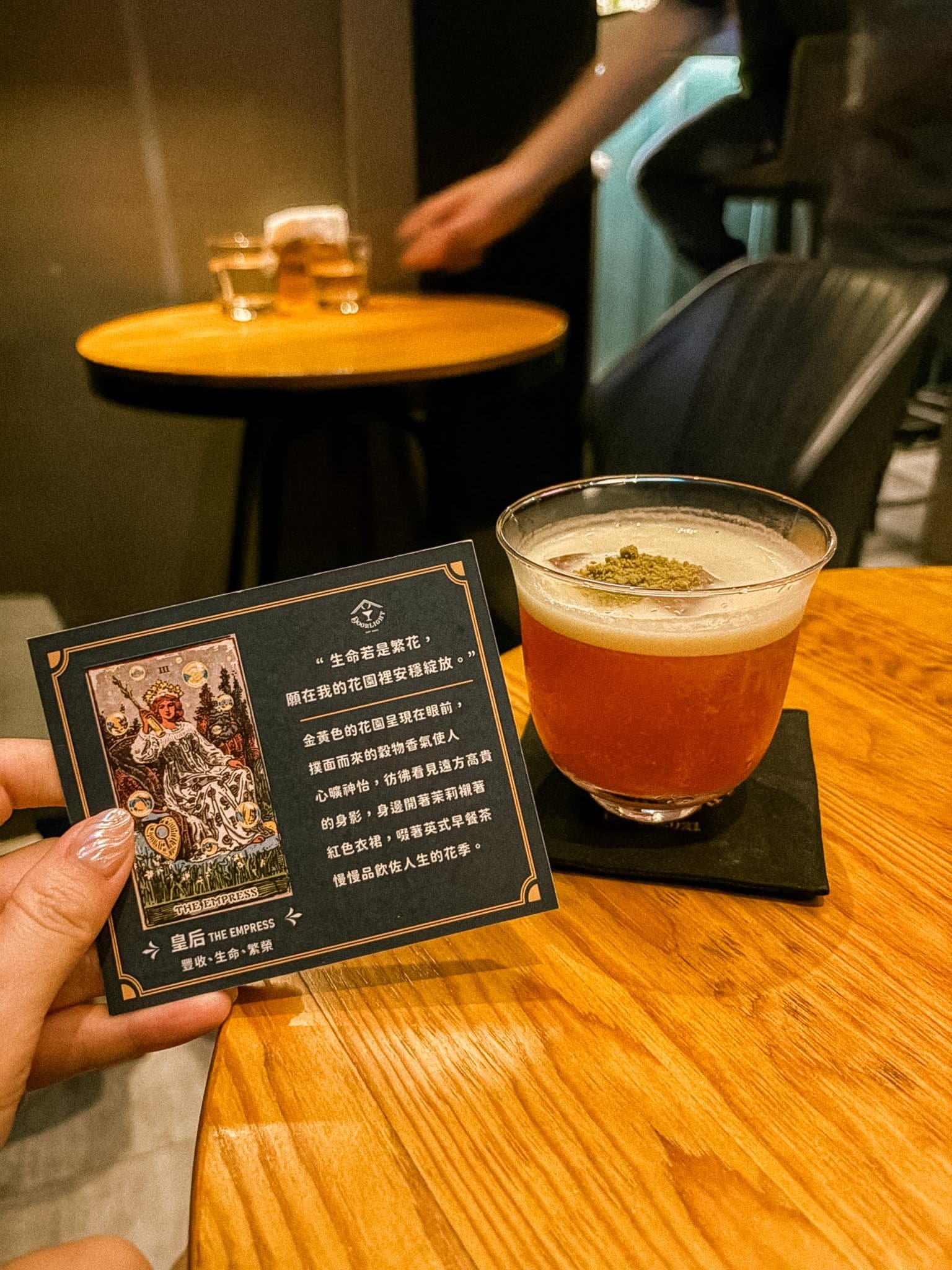
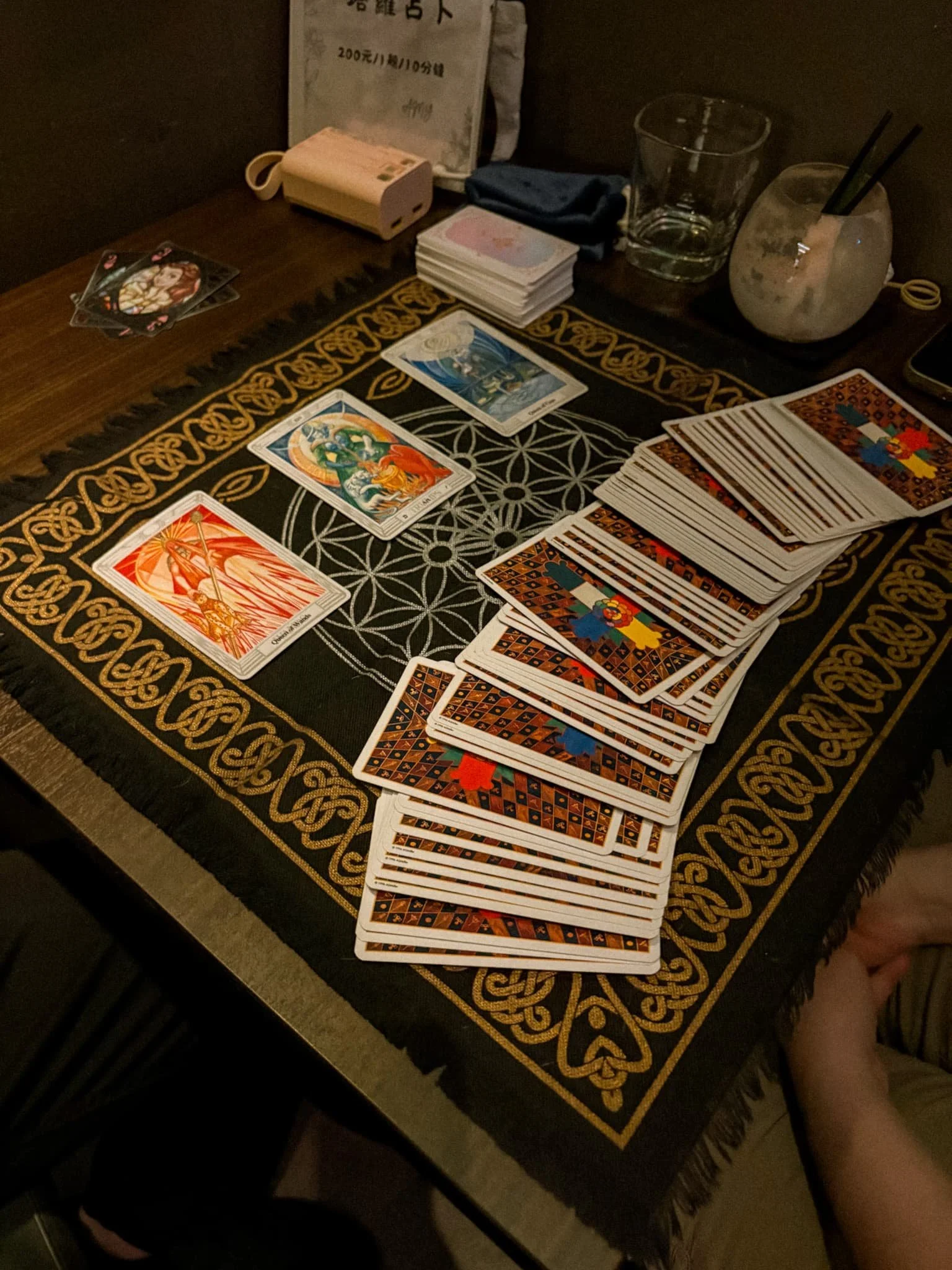
Every cocktail on the menu is a tarot card — and yes, there's a real tarot reader on site. My fiancé found this one, and it ended up being one of our favorite stops in Kaohsiung.
Bar Doorlight's entire cocktail menu is built around the tarot deck, so your drink order is basically a reading in itself. It's tucked in an alley near the Sanduo shopping district — small, moody, and exactly the vibe you'd want for a witchy night out.
What makes it extra special is the tarot reader who sets up inside. She's not affiliated with the bar, so she keeps her own hours and sometimes leaves earlier in the night. Buy a cocktail and you get a complimentary reading — one per person, one reading only.
Just a heads up: she only reads in Chinese, so bring a friend who can translate or have Google Translate ready. Still 100% worth it.


— Iconic Bites in Kaohsiung —
Duck Rice (鴨肉飯)
A Kaohsiung classic—tender duck over fluffy rice, often with a savory drizzle
Seafood (海鮮)
Head to Cijin Island (旗津) for the freshest catch — think grilled squid, clams, and crab
Beef Noodles (牛肉麵)
A must-try soul-warming bowl of rich broth, tender beef, and chewy noodles!
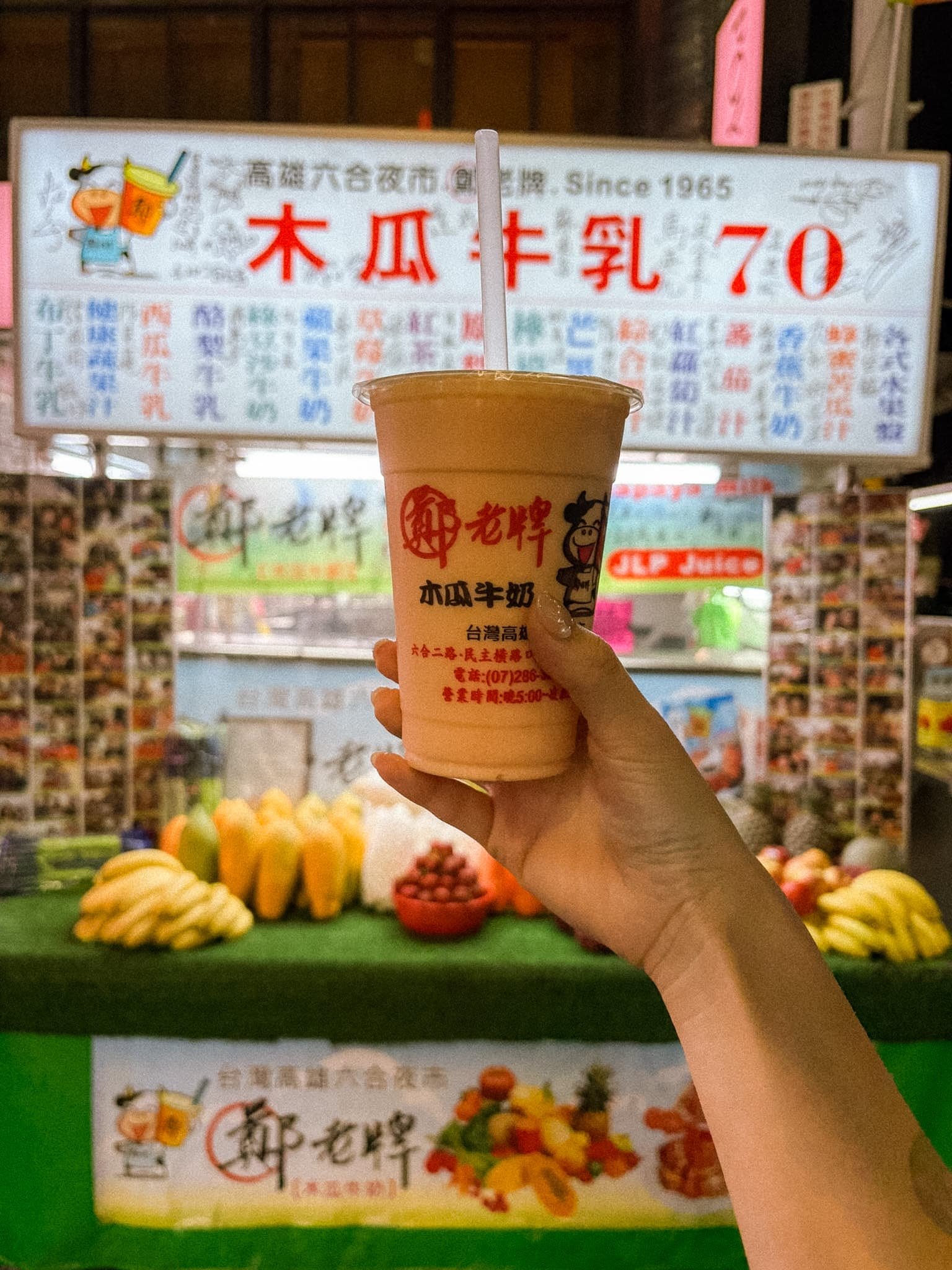
Papaya Milk (木瓜牛奶)
My favorite drink when I was a kid! This creamy and sweet drink is blended with ripe papayas and cold milk. So nostalgic.
where to explore
🌈 Dome of Light 光之穹頂
🎟️ Free | ⏱️ ~15 min | ⏰ 6:00 AM – 12:00 AM | 📍 800, Taiwan, Kaohsiung City, Sinsing District, Mingzhuang Village, Zhongshan 1st Rd, 115號B1
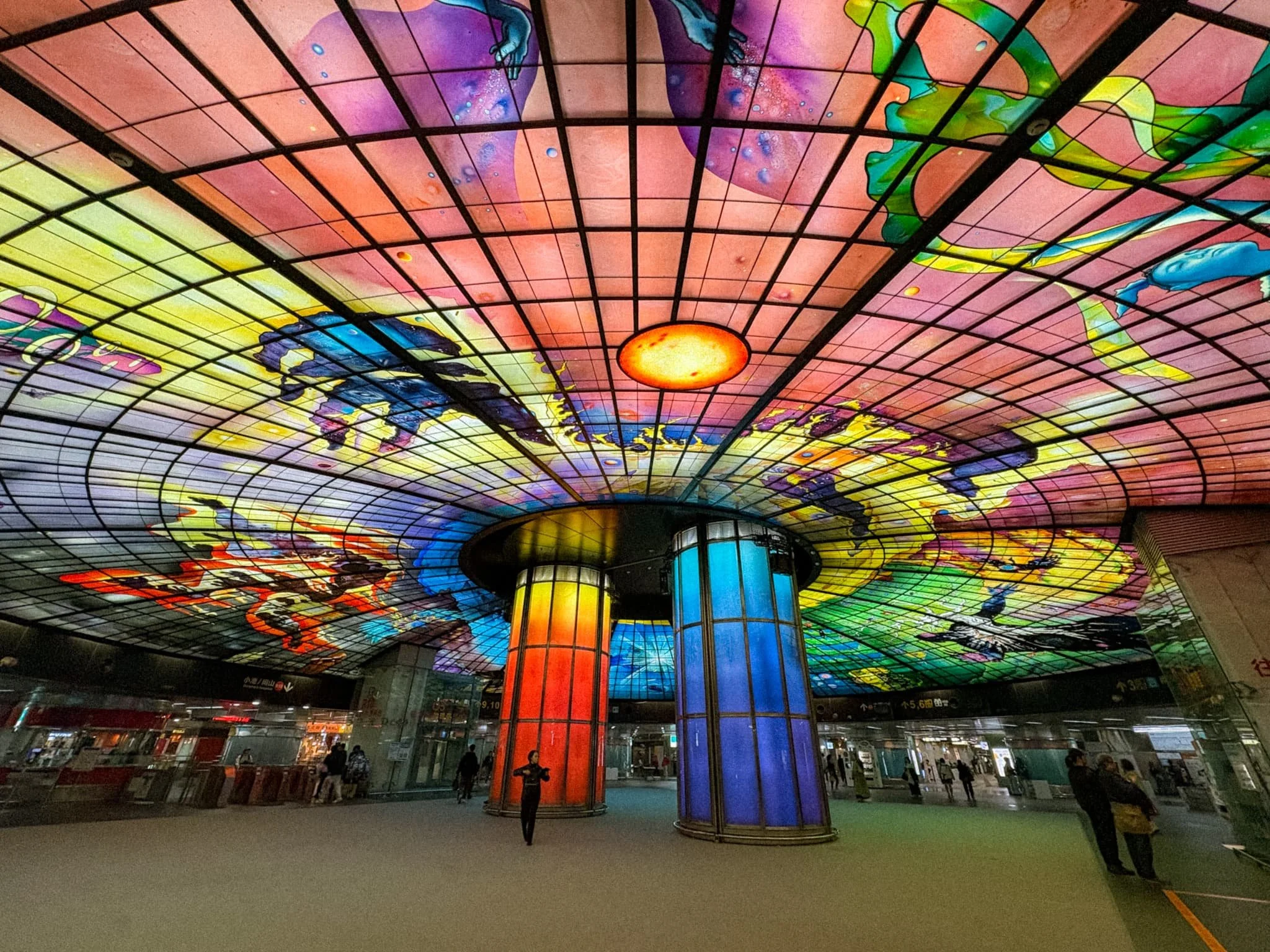
You'll walk into an MRT station and somehow end up staring at the ceiling for twenty minutes straight.
Located inside Formosa Boulevard Station — one of the most beautiful MRT stations in Taiwan — the Dome of Light is a massive glass artwork created by Italian artist Narcissus Quagliata. It took four years to complete and was shipped all the way from Germany, telling the story of human life through four elements: water (the womb of life), earth (prosperity and growth), light (the creative spirit), and fire (destruction and rebirth).
I first saw this during my college years when it was brand new, and it's still wild to me that an MRT station ceiling became an international must-see spot for tourists. It's a quick stop but genuinely incredible in person — a little overwhelming at first, in the best way possible.
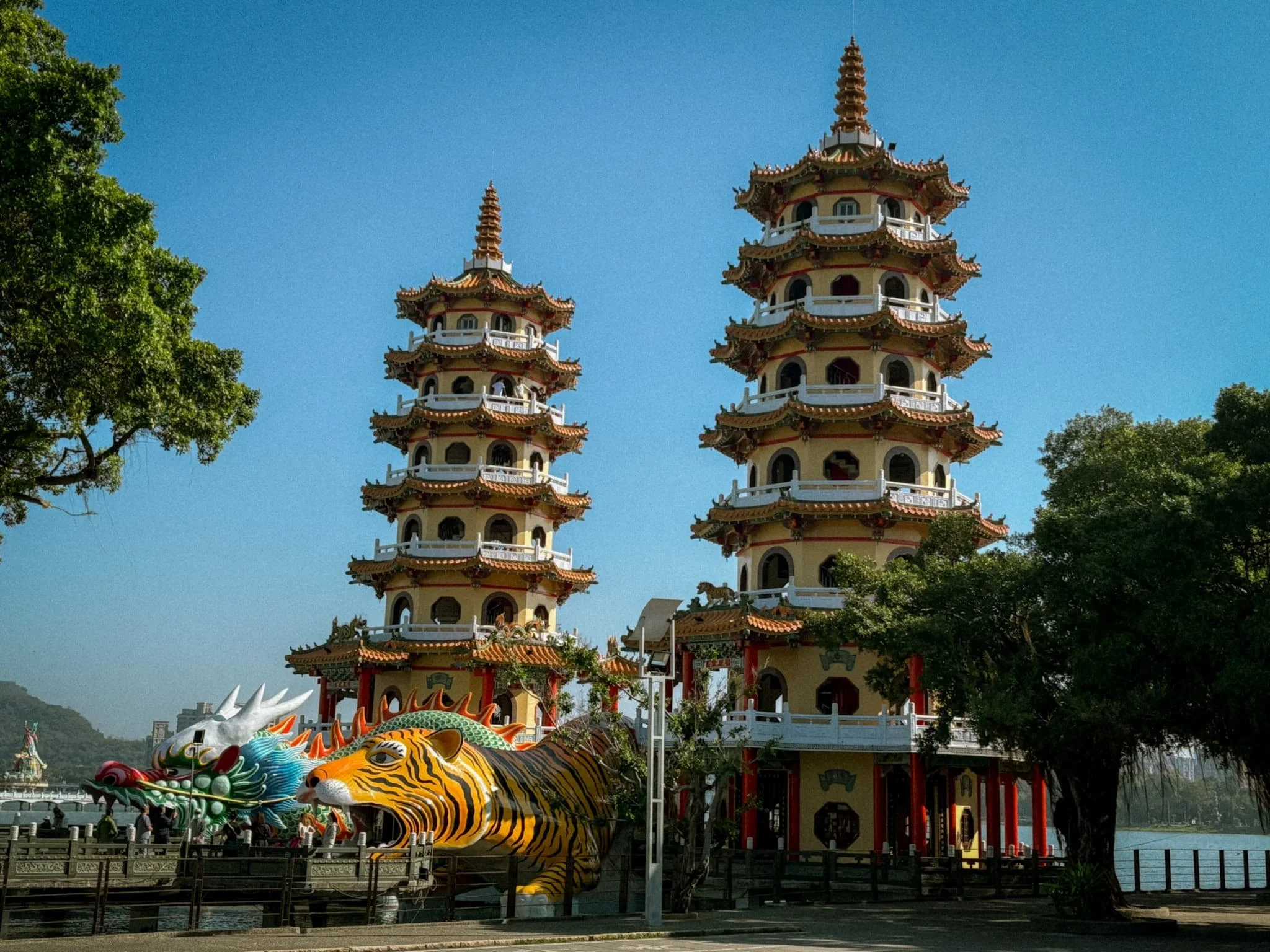
🐉 Dragon & Tiger Pagoda 龍虎塔
🎟️ Free | ⏱️ ~1 hr | ☀️ Best in the morning | 📍 No. 9號, Liantan Rd, Pidong Village, Zuoying District, Kaohsiung City, Taiwan 813
You enter through the dragon's mouth and exit through the tiger's — and apparently, that's enough to flip your luck around. According to tradition, doing so transforms bad luck into good.
Built in 1976 at the edge of Lotus Pond, the Dragon and Tiger Pagoda is one of Kaohsiung's most iconic landmarks. Walk in through the dragon's open mouth, wind through the painted corridors inside, and exit through the tiger.
I first came here as a kid, and I remember being genuinely terrified of the paintings inside. Each one depicts a phase of what happens after death — a visual journey through the consequences of good and bad deeds in life. My mom walked me through every single one.
Coming back as an adult felt completely different — same paintings, completely new perspective. This time, we even climbed all the way to the top of the spiral staircase, and the view over Lotus Pond from up there was incredible.
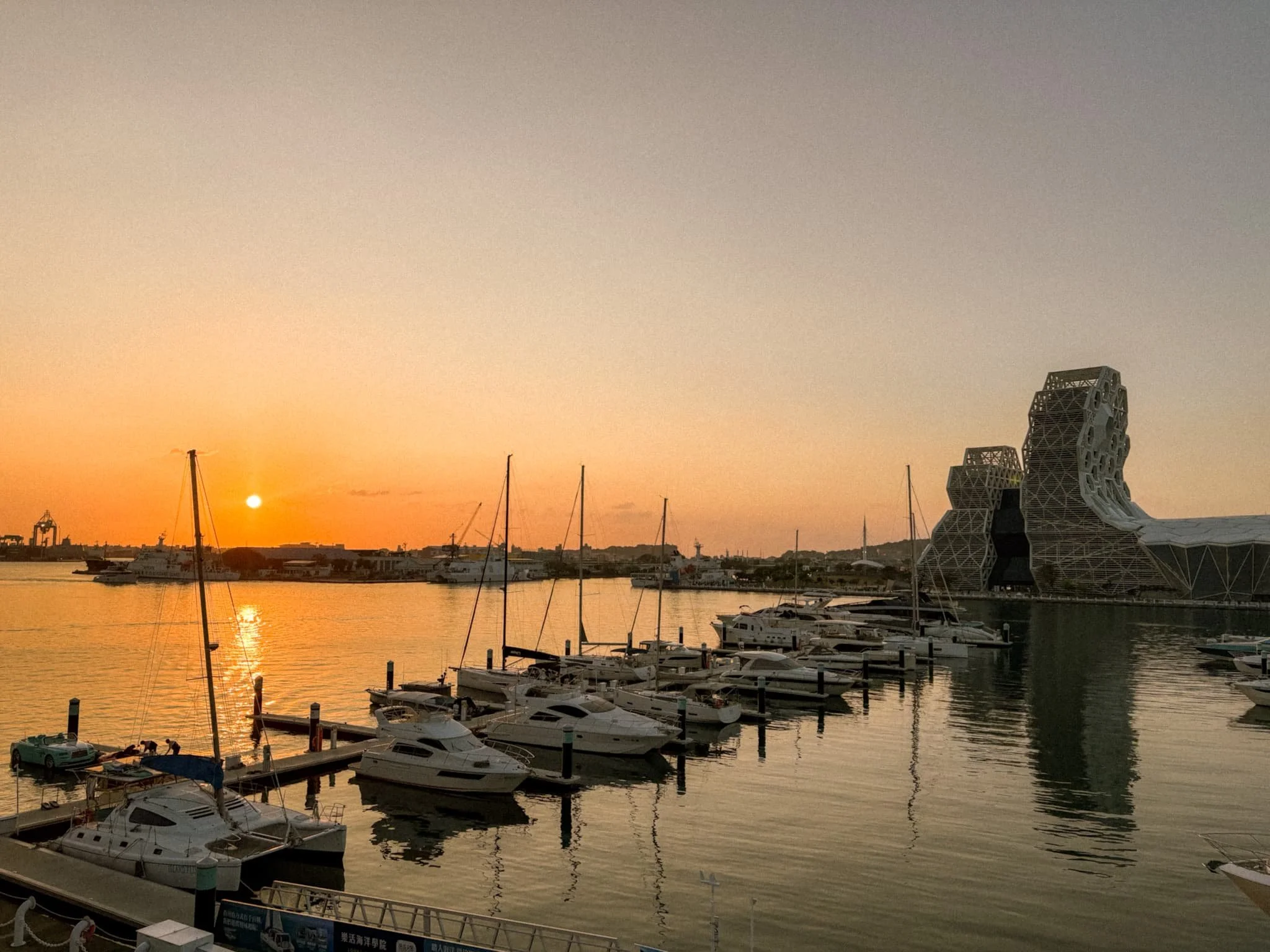
⚓ Glory Pier 光榮碼頭
🎟️ Free | ⏱️ 1 - 2 hrs | ☀️ Best at sunset | 📍 No. 31號, Haibian Rd, Lingzhong Village, Lingya District, Kaohsiung City, Taiwan 802
Whether you feel like catching it in golden hour or mid-concert crowd, Glory Pier is always mesmerizing in its own way.
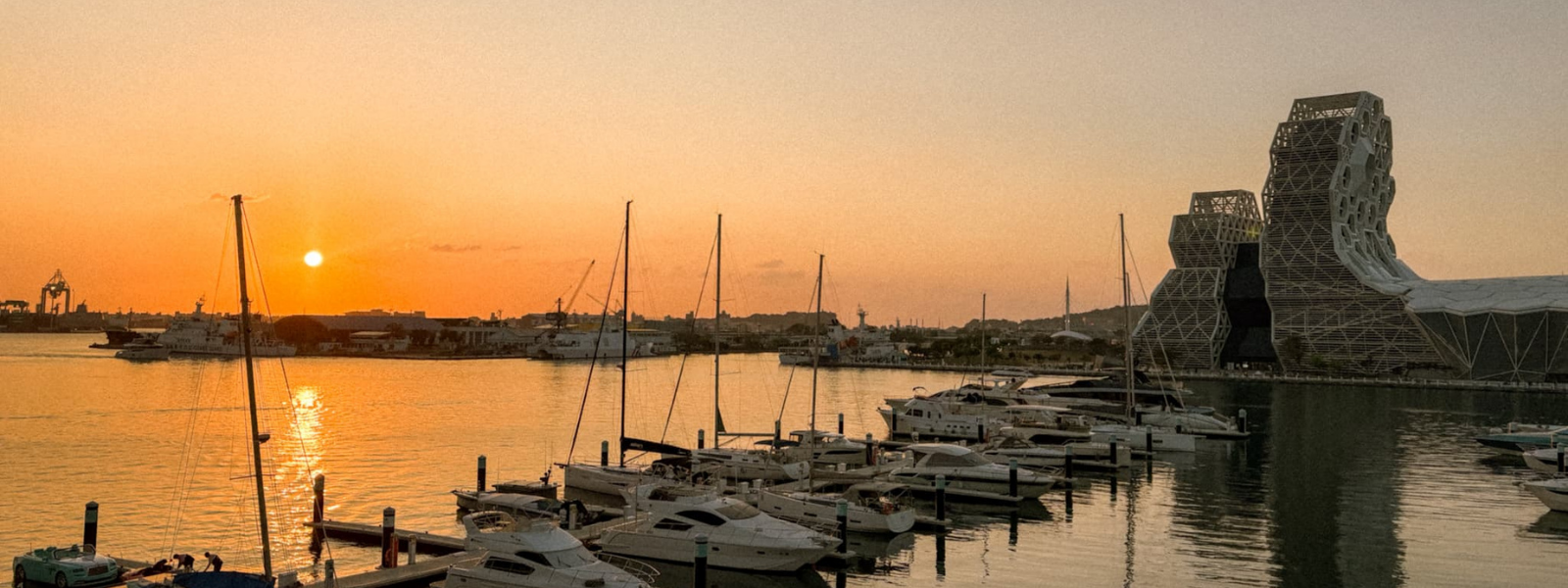
Kaohsiung's waterfront has had quite the glow-up, and this is proof — what was once just a stretch of harbor is now one of the city's most lively spots, with shopping, live events, and that sweeping view of the National Kaohsiung Center for the Arts across the water.
When we visited in January, there was a concert being set up, and there were already crowds forming around it. We mostly just walked around and soaked in the beautiful sunset.
FUN FACT: We were looking for the famous giant yellow rubber ducky installation and couldn't find it anywhere — looks like it had already been taken down by then… Worth checking what's on before you go!
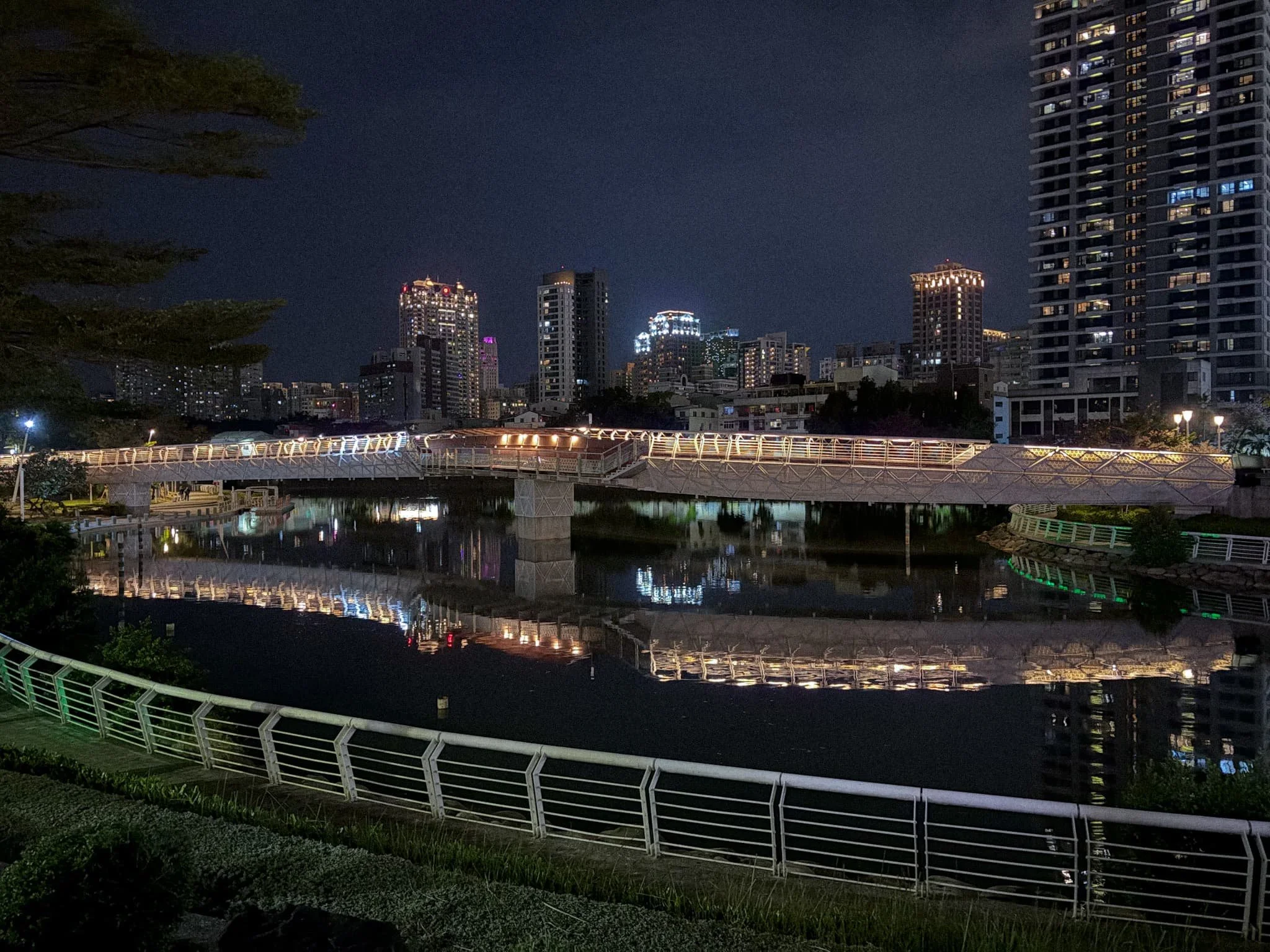
💕 Love River 愛河
🎟️ Free | ⏱️ ~30 min | ☀️ Best at dusk | 📍 Qianjin District, Kaohsiung
The glow-up story of Love River is frankly more impressive than its romantic reputation.
When I was growing up, this river was filled with trash and pollution — not exactly the couples' destination it is today. Originally called the Dagou River during the Qing Dynasty and later renamed the Takao River under Japanese rule, it eventually became the Kaohsiung Canal before the city cleaned it up, rebranded it, and let the name finally match the vibe it is today.
Now, it's a pleasant evening stroll lined with lights, riverside cafes, and couples doing exactly what the name suggests. Nothing that'll blow your mind, but a nice way to wind down after a full day of exploring. Grab a drink nearby and just walk.

where to stay
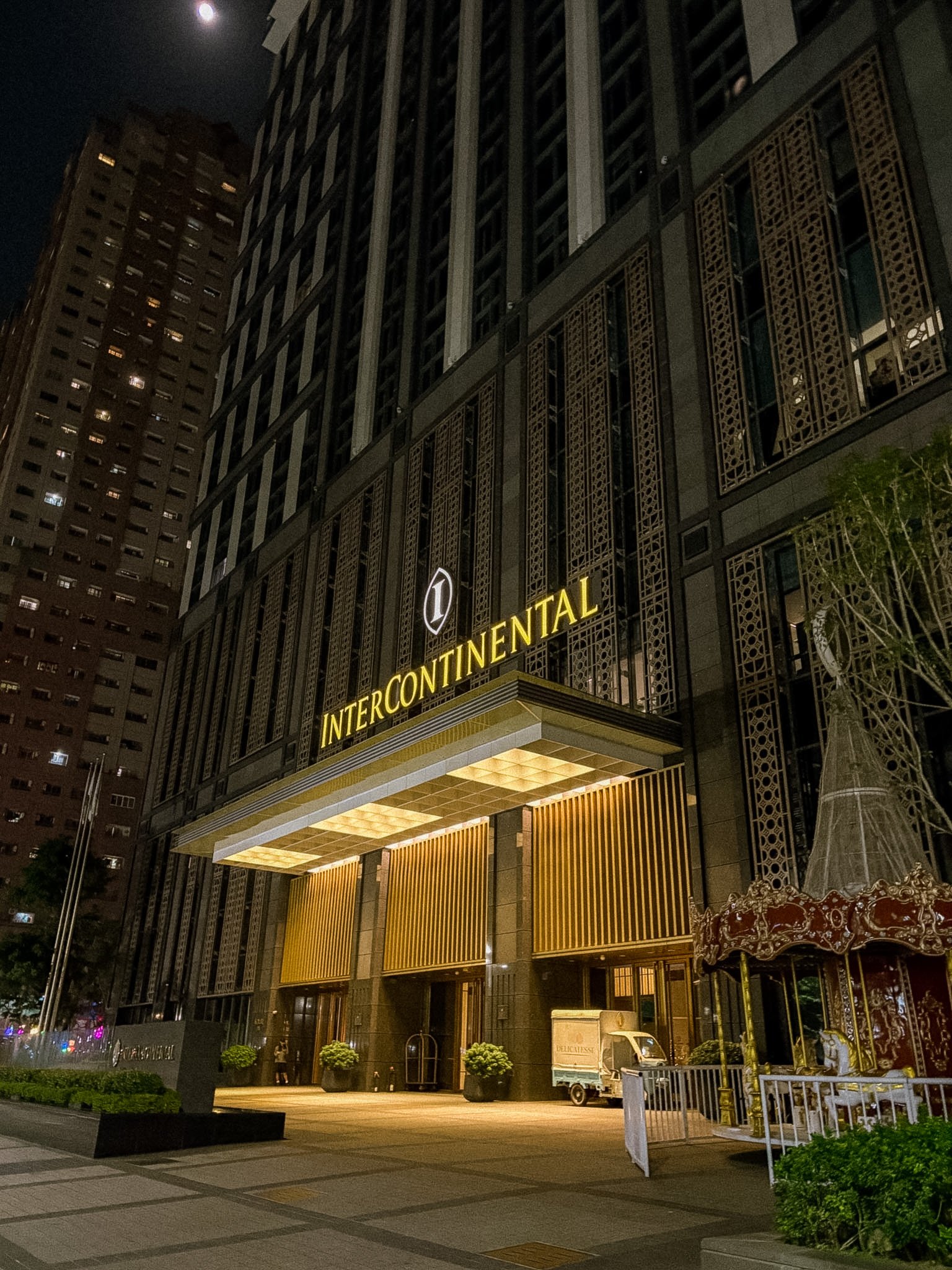

— Find Your Perfect Stay —
-
Taiwan Tourism Administration: Dome of Light
Taiwan Tourism Administration: Kaohsiung City
Wikipedia: Kaohsiung
Wikipedia: Love River
check out my Taiwan travel vlog!
Last Updated: 08.24.2026
Papaya milk since 1965, cheese lobster, plant-based fried chicken, and a 7-Eleven inside the market that serves tap beer. Liuhe Night Market in Kaohsiung isn't your average night market — here's exactly what to eat, what to play, and whether it lives up to the hype.