
【台北 中正紀念堂】Chiang Kai-shek Memorial Hall in Taipei

In the busy city of Taipei, the past and present blend at the famous Chiang Kai-Shek Memorial Hall. This well-known memorial in Taiwan is not just a place to visit — but also has a rich, dark history and is important to how Taiwan became Taiwan now.
The Chiang Kai-Shek Memorial Hall was built to honor the former president of Taiwan, Chiang Kai-Shek. Chiang Kai-Shek (蔣介石) is also known as Jīang Jìeshǐ in Mandarin.
The memorial’s stunning Chinese architecture impresses visitors from all over the world, and its history adds depth to the experience. Like many old buildings, its journey to greatness is marked by stories of struggles and successes, creating a memorable tale. 🏛️
Brief History

The man behind the memorial
The Chiang Kai-Shek Memorial Hall was built to honor President Chiang Kai-Shek after he passed away on April 5, 1975.
The Executive Yuan commissioned architect Yang Cho-cheng to design the memorial, who incorporated traditional Chinese architectural elements modeled after the Sun Yat-sen Mausoleum in Nanjing, China.
The hall opened to the public five years later, on the anniversary of Chiang's death, as a tribute to his lasting impact.
Chiang Kai-Shek's rule
In 1949, after Japan's departure from Taiwan and the KMT (Kuomintang) government's retreat to the island, Chiang Kai-Shek became Taiwan's leader with the goal of eventually retaking mainland China from the CCP (Chinese Communist Party).
While his leadership boosted Taiwan's economy through the 1970s and 80s, his rule was also marked by the 228 Incident — a 1947 uprising violently suppressed by the government — and the White Terror, the decades-long period of martial law and political oppression that followed. More than 10,000 Taiwanese people died during this era, a history that still shapes how the island views this period today.
Taiwan's democratic shift
In the 1990s, Taiwan transitioned from authoritarian rule to liberal democracy. As the country re-examined Chiang Kai-Shek's legacy, human rights violations during the martial law era came under closer public scrutiny.
The statues today
Taiwan is still debating whether this memorial — and Chiang Kai-Shek's presence within it — should remain as it is. Many of his statues have been quietly removed from public spaces across the island and relocated to a mausoleum park dedicated to him.
💡 PRO TIP: The honor guard changes position every hour. Many visitors wait inside to watch, so arrive early to find a good spot!
Getting There

It’s super convenient to get to Chiang Kai-shek Memorial Hall.
Here are a couple of options:
MRT
Ride to Chiang Kai-shek Memorial Hall Station and take Exit 5. A short walk later, you're at the memorial.
Read my MRT guide →Bus
Get off at the Chiang Kai-shek Memorial Hall stop and walk over.
YouBike
There's a bike station right outside the memorial, so you can park and walk right in.
Read my YouBike guide →Tip: grab an EasyCard for seamless access to Taiwan's public transportation.
Read my EasyCard guide →What to See

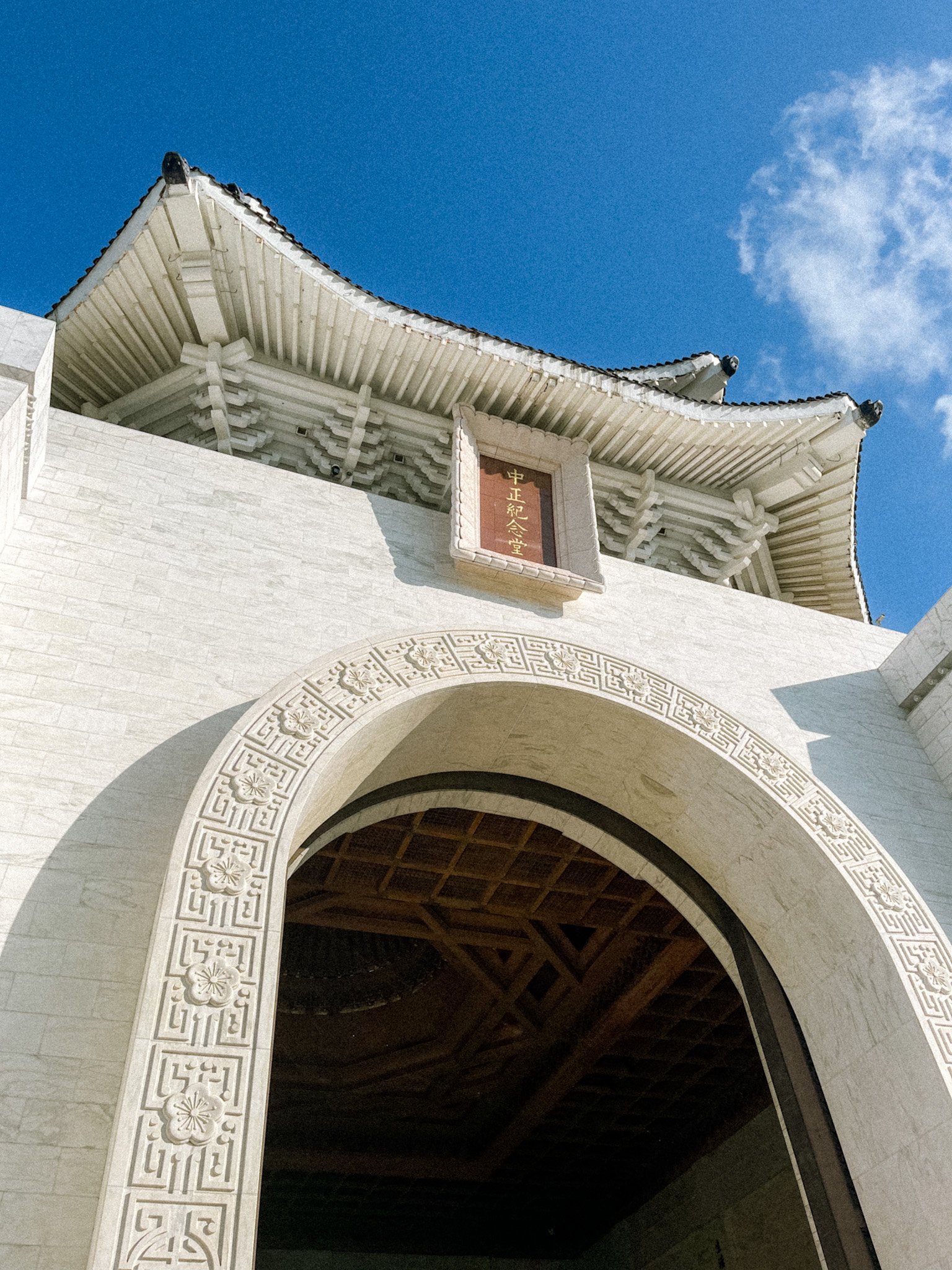
“Liberty Square” archway
The entrance archway with Chinese traditional characters saying 'Liberty Square' allows you to enter the plaza.
The arch is tall and stands like a protector, welcoming people to the impressive memorial ahead.

Climb up the stairs
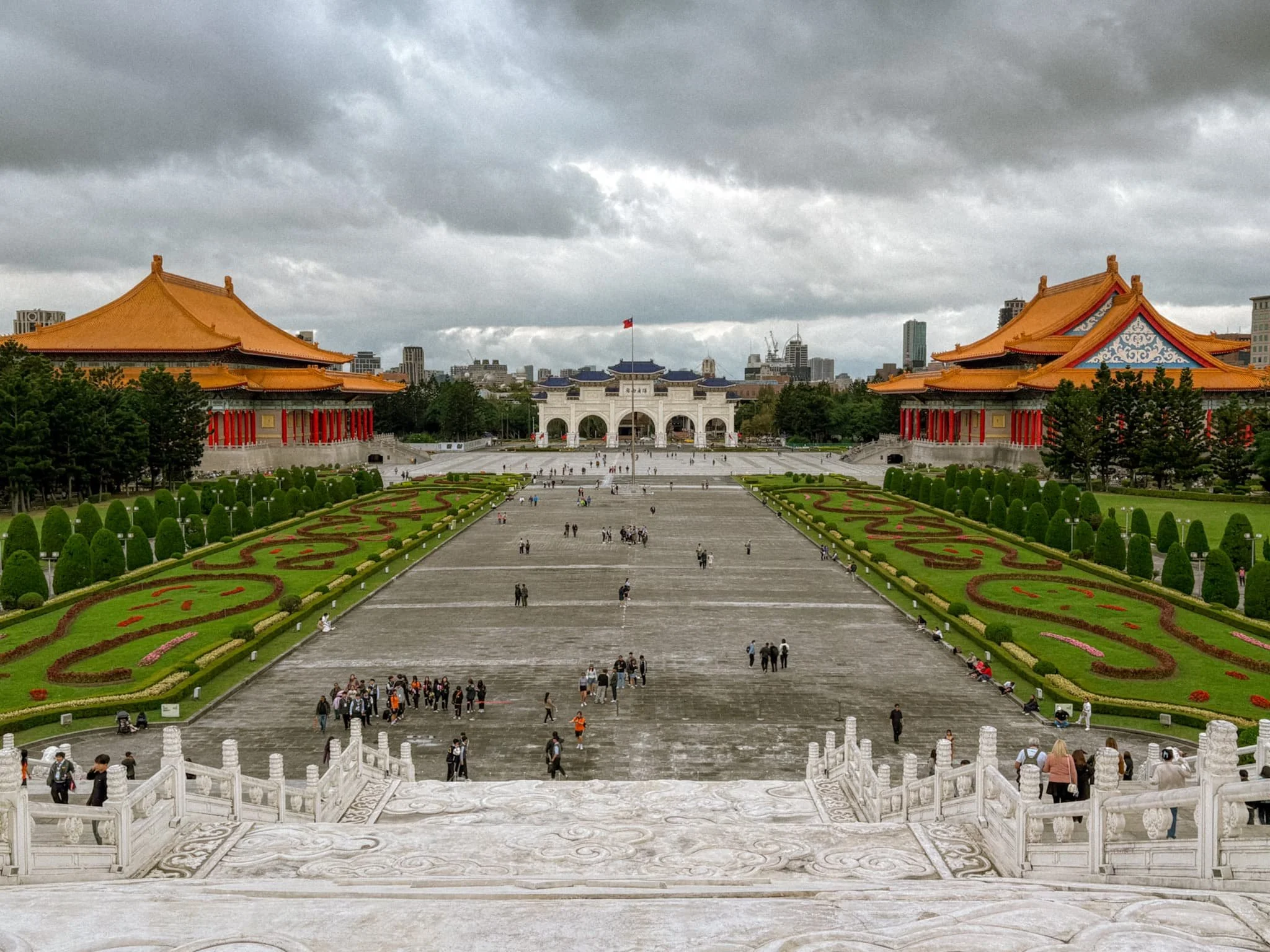
At the memorial, there are two sets of stairs with a total of 89 steps leading into the hall.
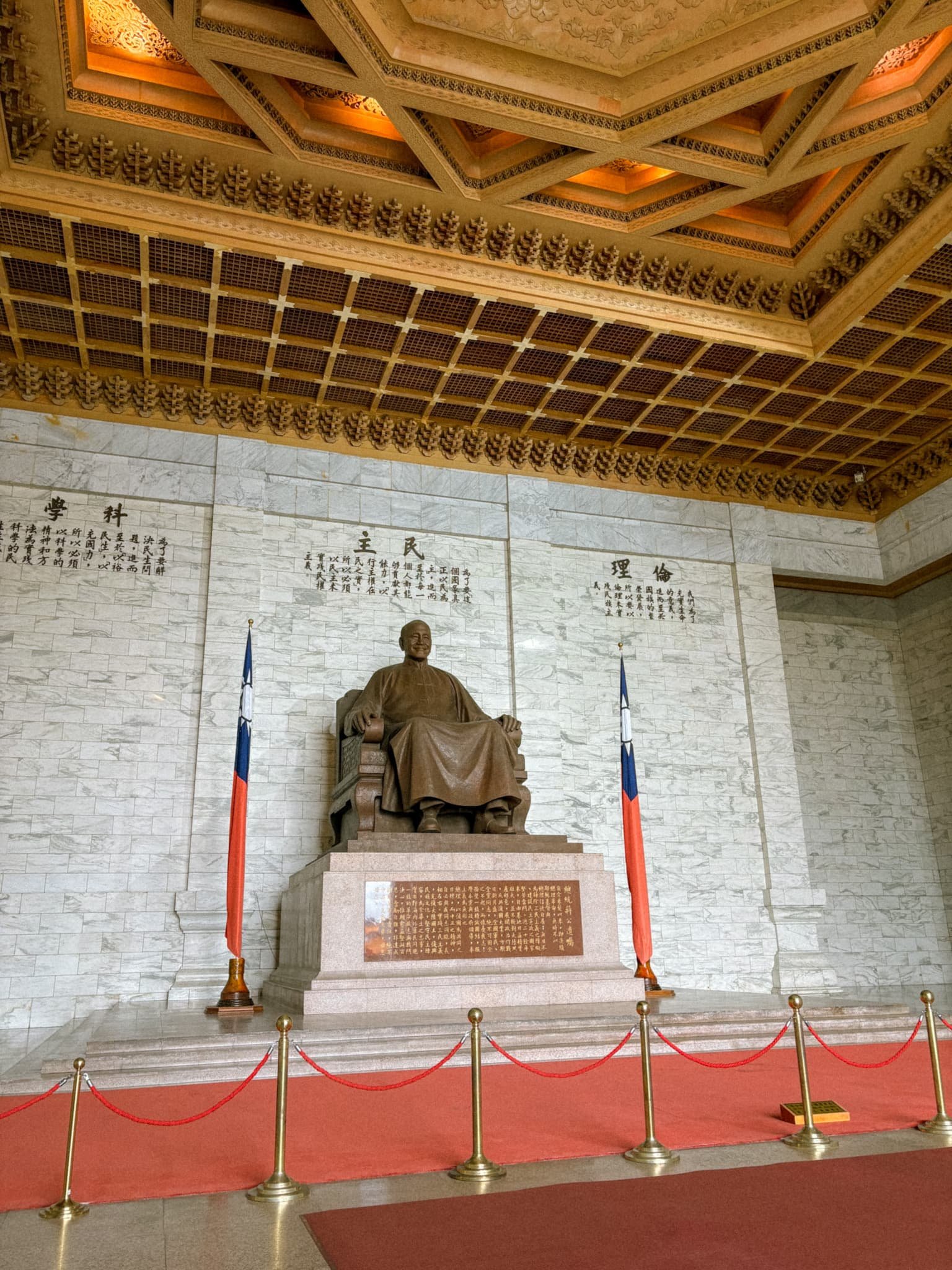
Inside, you'll find the magnificent bronze statue of Chiang Kai-Shek in the main hall. The 89 steps symbolize Chiang Kai-Shek's longevity and his influence on Taiwan.
The view from the top is stunning, especially on a clear day.
The National Theater & Concert Hall
On both sides are the National Theater and National Concert Hall, matching red-and-gold buildings that host some of Taiwan's biggest performances. Even if you're not catching a show, they're worth the walk over.
Scenery Books & Café 風景書店
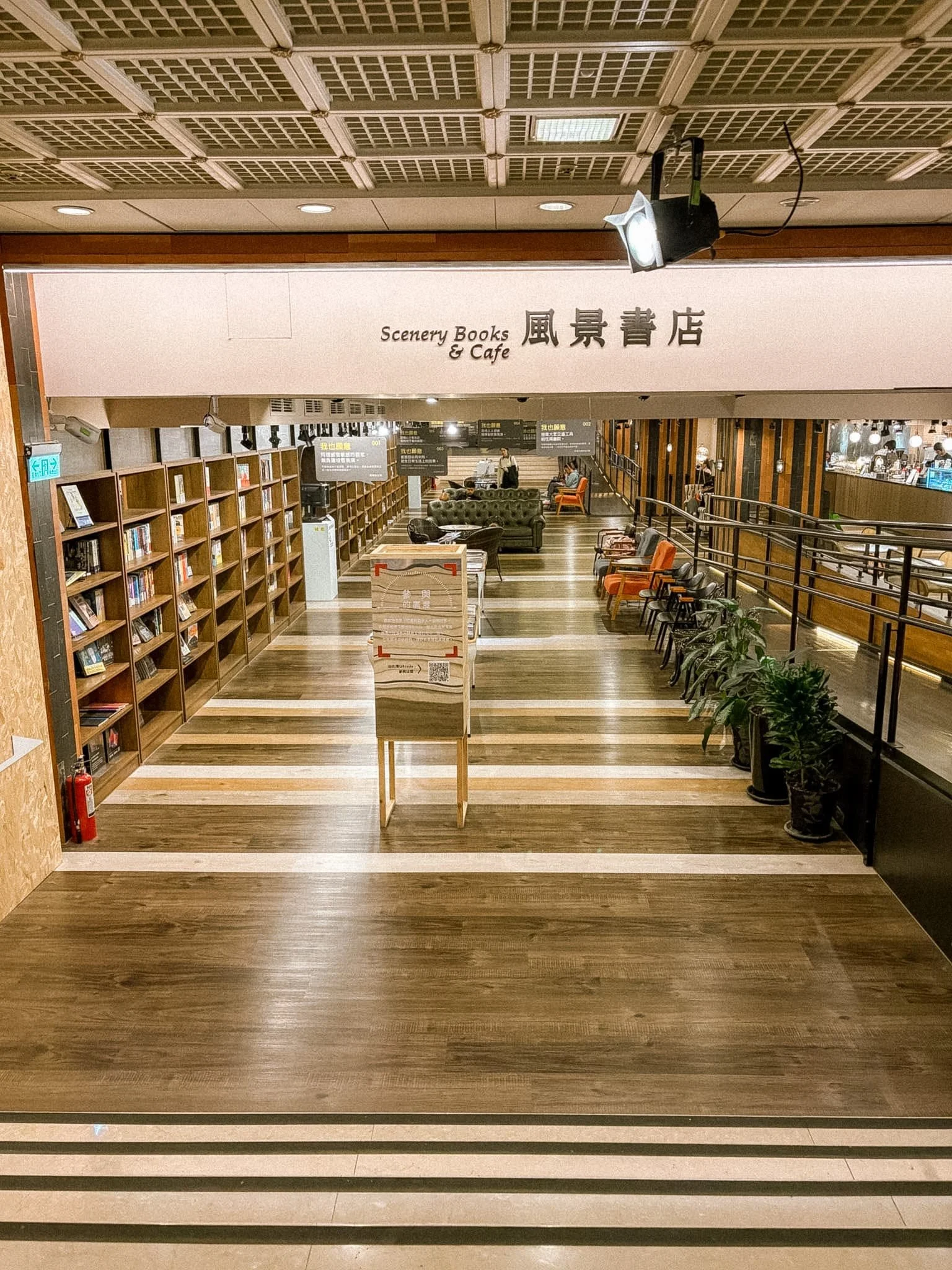
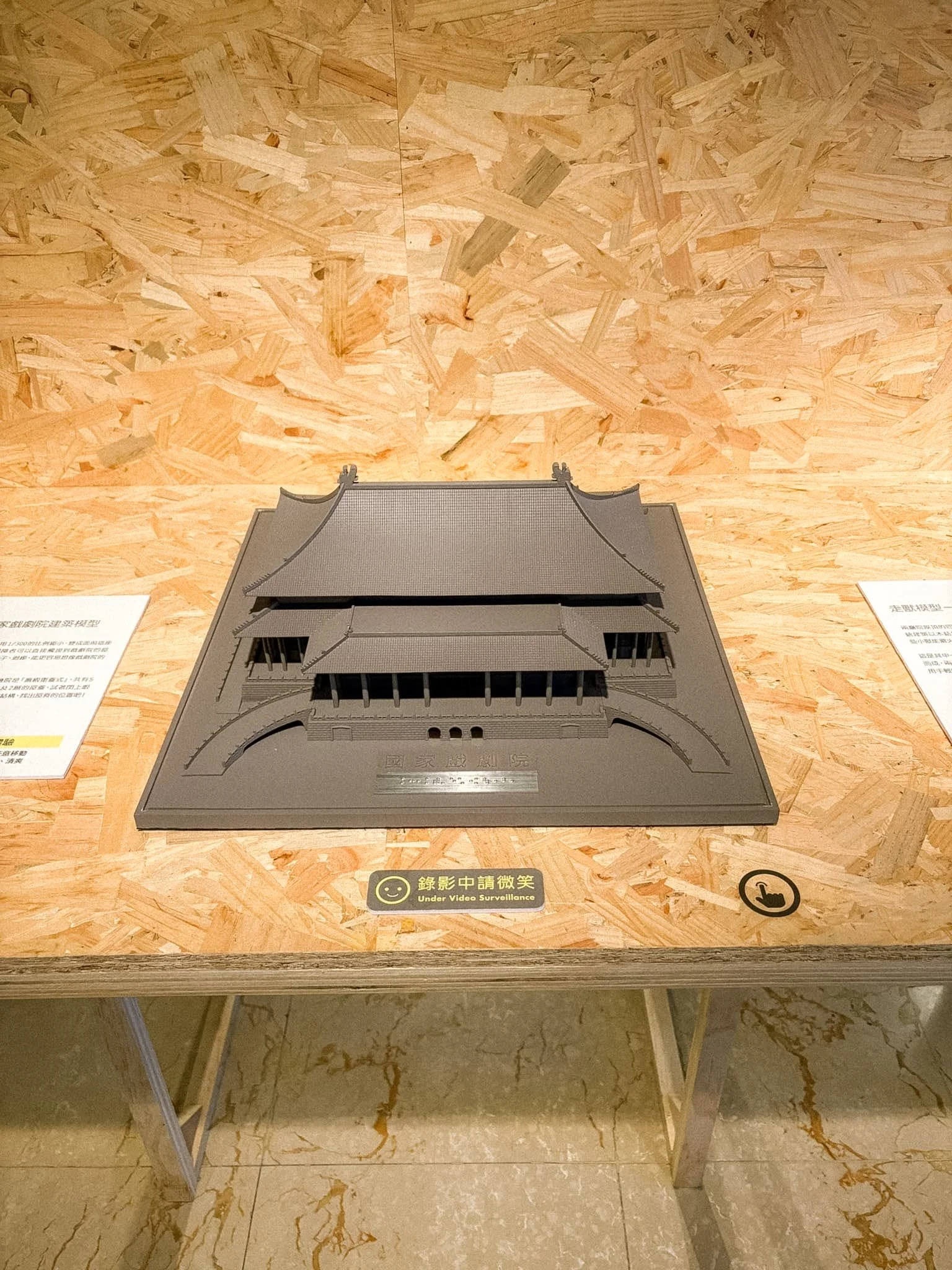
Located inside the National Theater is a genuinely underrated stop — a bookstore-café with cozy seating and shelves of Chinese books. It's a great spot if you need a break from the heat (or the crowds), and it's the kind of hidden gem most visitors walk right past.
The gardens
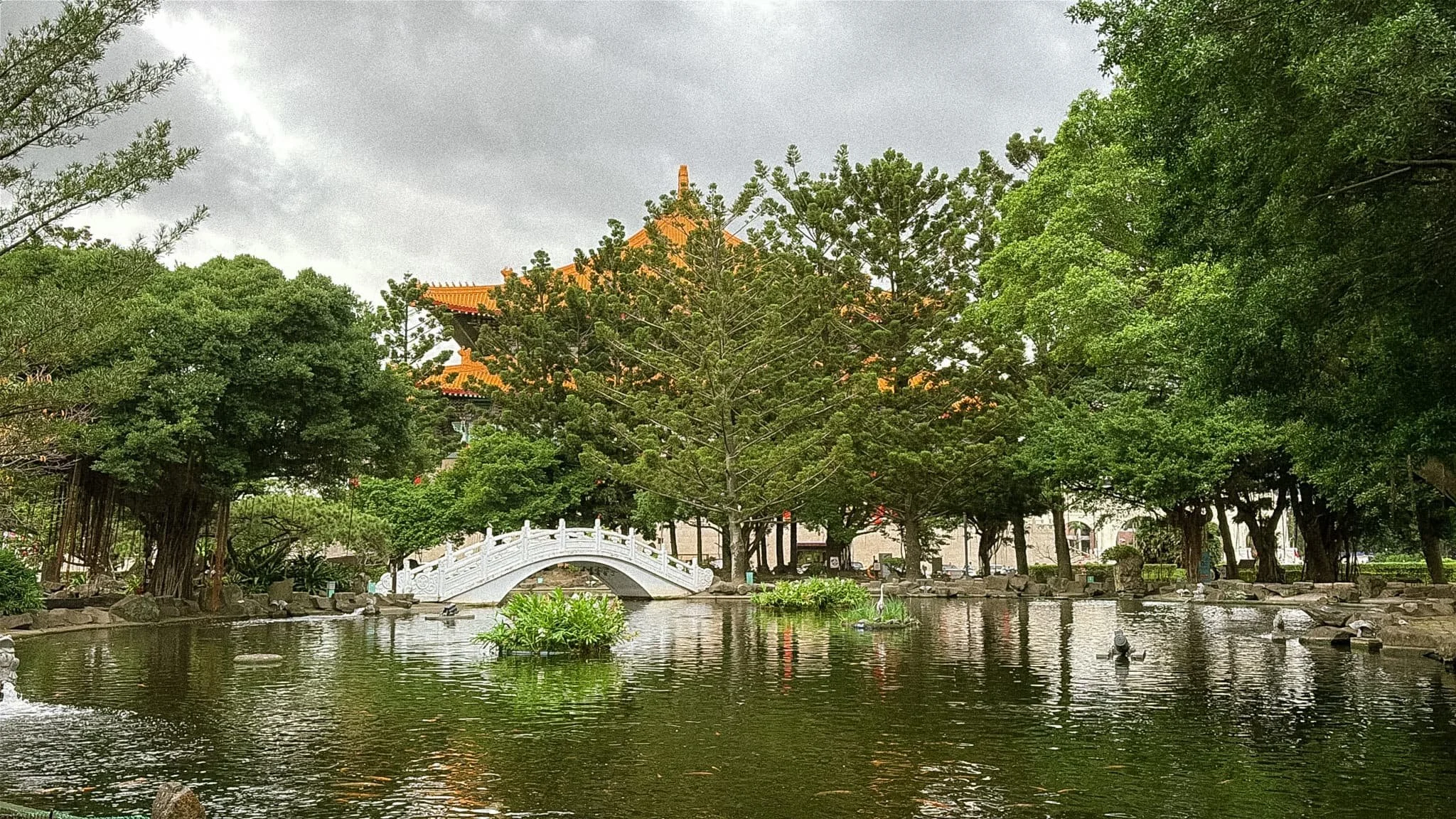
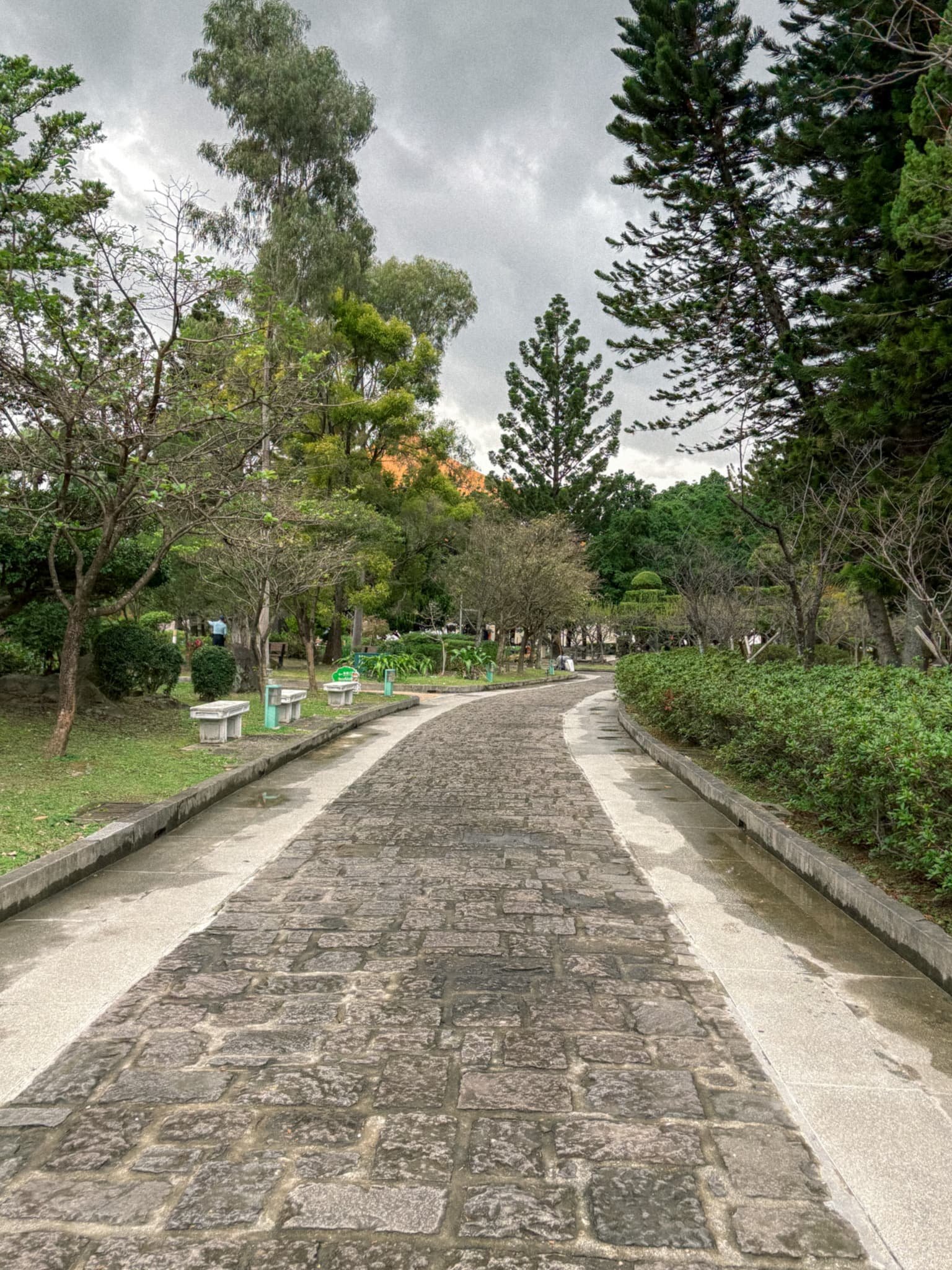
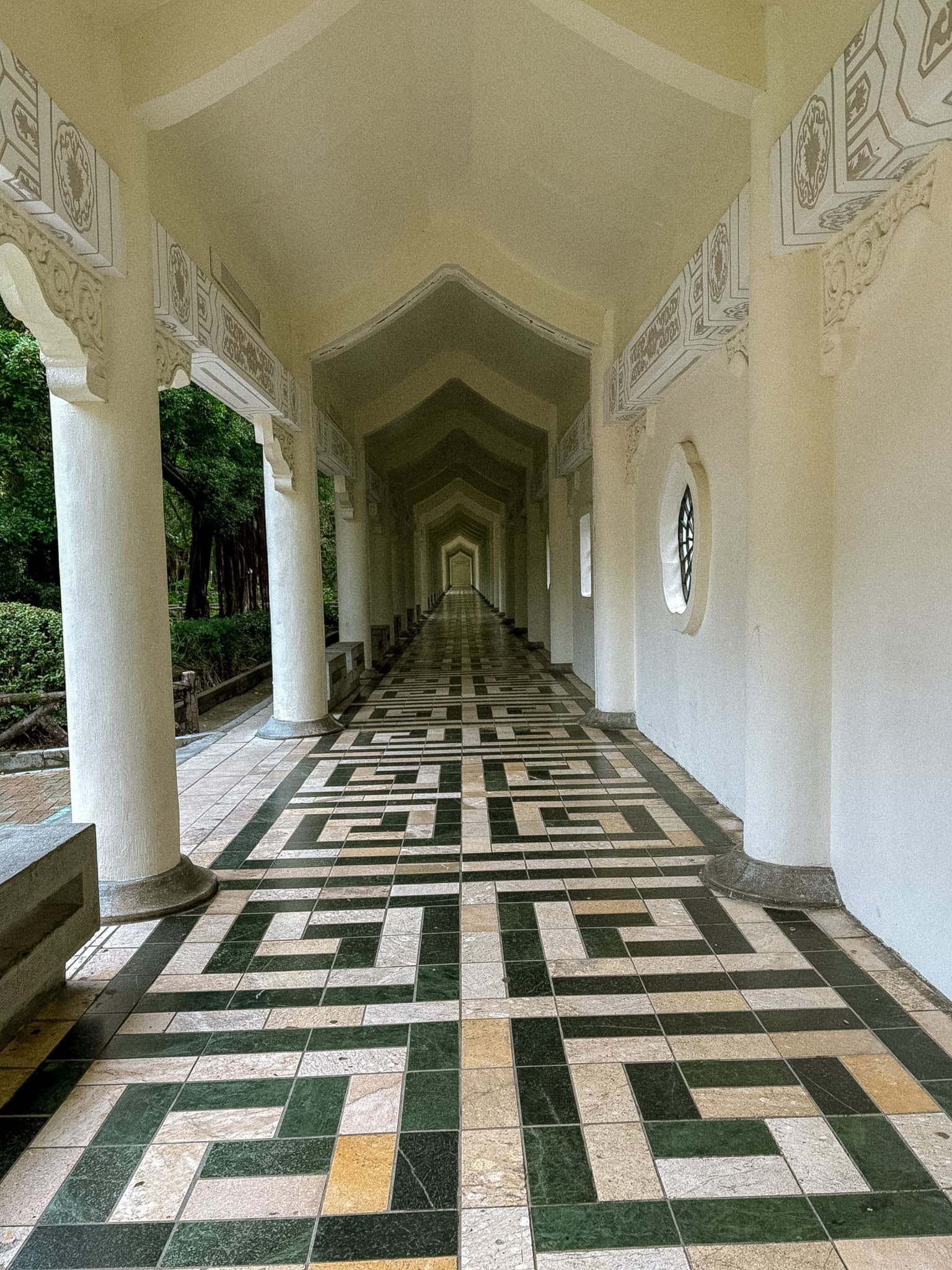
The grounds have a quieter side too — a koi pond, a traditional small arched white bridge, and enough greenery that you'll forget you're steps away from the main plaza.
Taipei Experiences You'll Love
What's Nearby
FAQ
Is Chiang Kai-Shek Memorial Hall worth visiting?
Yes — it's one of Taipei's most iconic landmarks, and even if you're not a history person, the architecture and Liberty Square grounds alone are worth the stop. Plus it's free, so there's really no downside to adding it to your itinerary.
How do I get to Chiang Kai-Shek Memorial Hall?
Take the MRT to Chiang Kai-Shek Memorial Hall Station and exit at Exit 5 — you'll see the memorial right in front of you within a few minutes' walk.
Is Chiang Kai-Shek Memorial Hall free?
Yes, entry to both the memorial hall and Liberty Square is completely free.
How long should I spend at Chiang Kai-Shek Memorial Hall?
Plan for 1-2 hours to see the grounds and main hall. If you want to explore the rotating exhibits inside (they change every few weeks), give yourself closer to 3 hours.
When does the honor guard change at the memorial?
The guard changes position every hour, on the hour. Arrive a few minutes early to grab a good spot — it gets crowded fast.
Why is Chiang Kai-Shek Memorial Hall controversial?
Chiang Kai-Shek's rule included the 228 Incident and decades of martial law, so the memorial remains a point of debate in Taiwan today — some see it as an important part of the island's history, others feel it shouldn't honor him at all. It's worth knowing the context before you visit.
What's good to eat near Chiang Kai-Shek Memorial Hall?
Right by the memorial is Nanmen Market — a traditional wet market worth a walk-through even if you're not there to eat, packed with dried goods, produce, and local food stalls.
Visit Info
VISIT
HOURS
Monday - Sunday
9:00 AM - 6:00 PM
LOCATION
Taiwan Vlog
-
Chiang Kai-shek Memorial Hall: From Authoritarianism to De-authoritarianism
YOU MIGHT ALSO LIKE



10252023 15:29 12132026 11:23
Last Updated: 10.12.2026
Tamsui's 400-year-old red fort is pretty on the outside and heavier on the inside. Here's what to see, what it costs, and where to eat after.