
【台灣台鐵】Taiwan Railway Guide
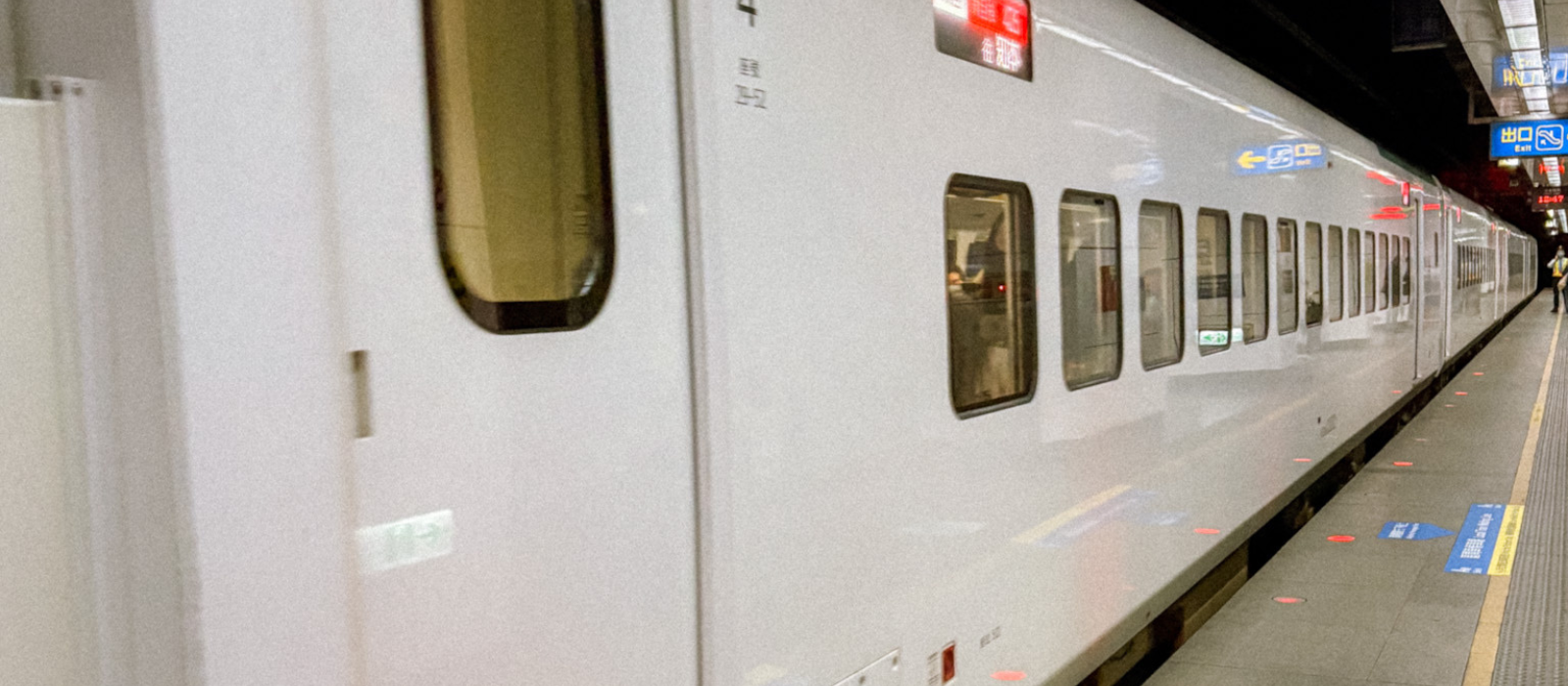
Taiwan’s MRT and HSR get all the hype… but honestly? TRA (Taiwan Railway Administration) is where the real exploring happens. Smaller cities, coastal views, and cheaper tickets.
If you’re researching what exactly the Taiwan Railway is, how to book Taiwan Railway tickets online, use the app, or wondering what riding the Taiwan Railway is actually like, this guide will save you time (and probably a few booking headaches).
about Taiwan Railway
If you’ve been researching Taiwan transportation, you’ve probably seen MRT, HSR, maybe LRT…
but then TRA pops up, and you’re like, wait — what is that?
Totally fair.

Train from Chiayi
TRA stands for Taiwan Railway Administration (now Taiwan Railway Corporation), and it’s basically Taiwan’s classic rail system that connects the entire island, including smaller cities and scenic routes that high-speed rail doesn’t cover.
Originally, TRA was a government agency operating from 1940 to 2023. As of January 1, 2024, it officially became Taiwan Railway Corporation (TR), a state-owned company headquartered at Taipei Main Station.
The railway itself actually goes way back — the first line between Keelung and Hsinchu was completed in 1893 during the Qing dynasty. When Japan colonized Taiwan in 1895, the rail system was rebuilt and expanded, which is why it still plays such a huge role in transportation today.
Compared to HSR, which mostly serves the west coast and major cities, TR runs a full loop around Taiwan. That makes it perfect if you’re heading somewhere scenic, smaller, or less touristy. Imagine east coast rides, coastal views, and access to places like Hualien or Taitung.
Ticket prices also tend to be pretty reasonable, so it’s a solid option if you want to travel deeper without spending HSR-level money.
understanding Taiwan Railway tickets
Before booking your tickets, it helps to understand how Taiwan Railway tickets work, since they're a little different from MRT or HSR.
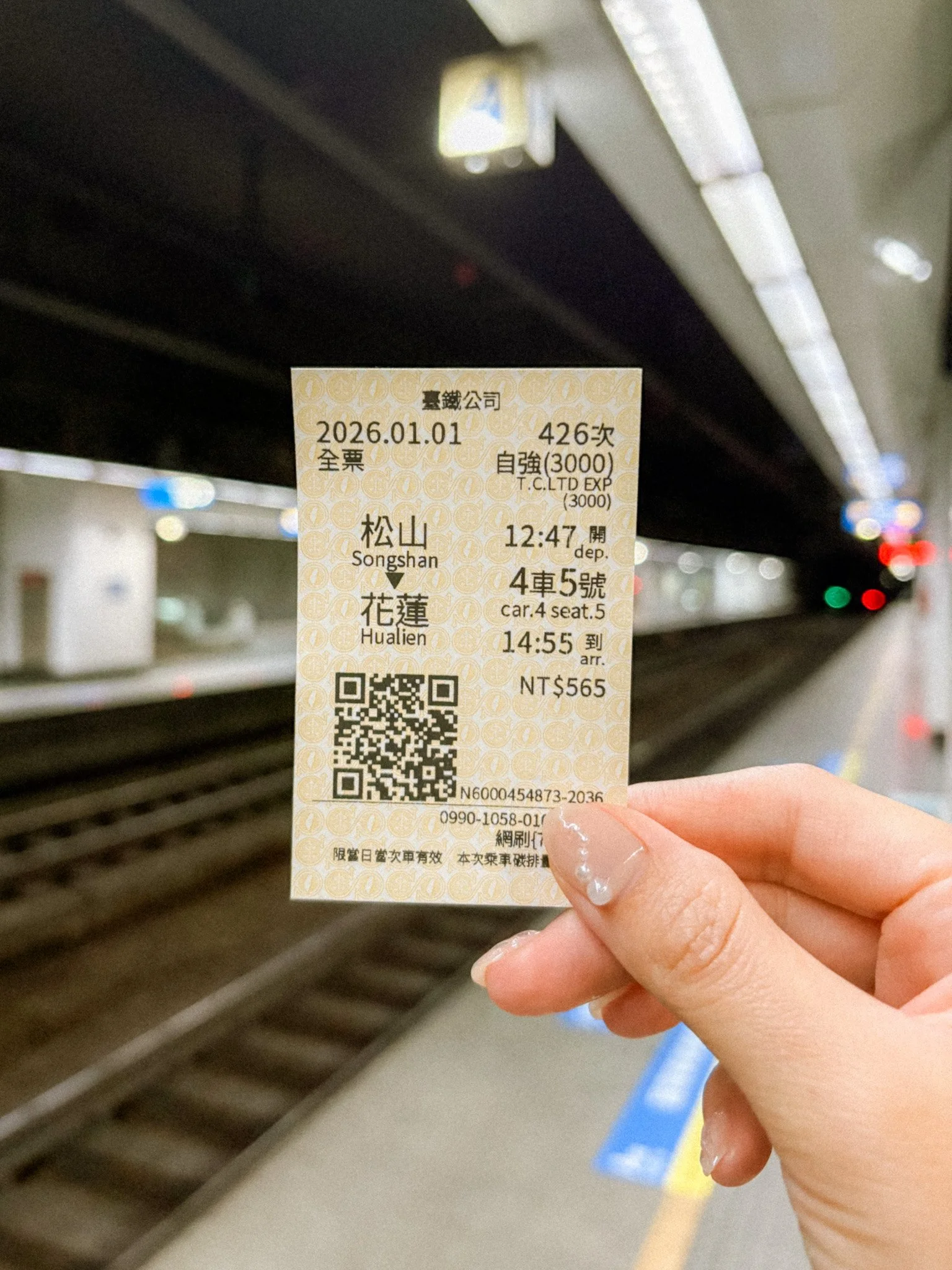
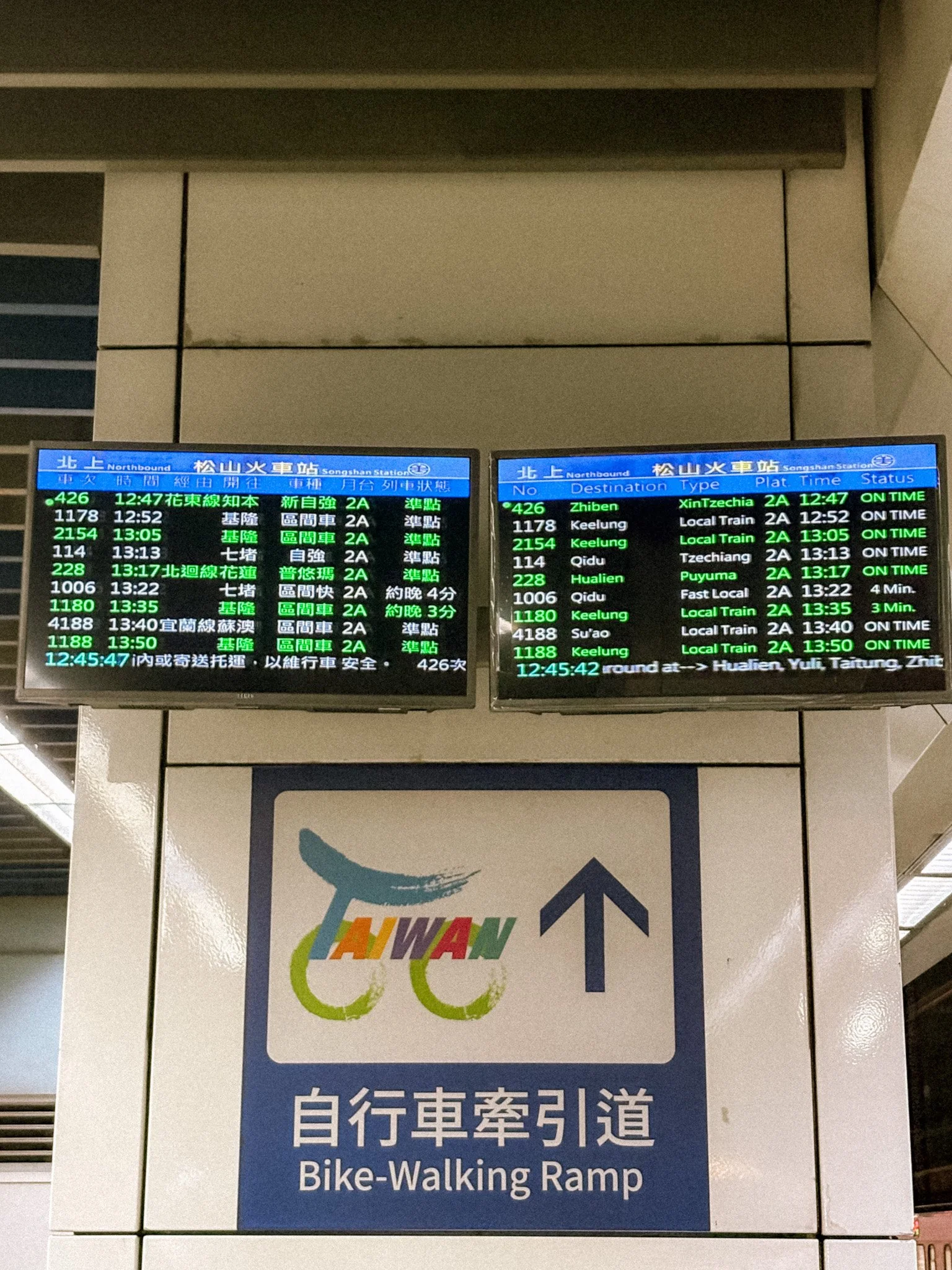
Reserved vs non-reserved tickets
There are reserved and non-reserved tickets. Reserved means you’ll have an assigned seat, which I personally recommend for longer rides or busy travel days. Non-reserved tickets are cheaper, but you’re basically grabbing any open seat — and sometimes that means standing if trains are full.
Express vs local trains
You’ll also see express trains and local trains. Express trains run faster with fewer stops between cities, while local trains stop more frequently, similar to MRT-style commuting. If you’re just hopping between nearby stops, tapping in with an EasyCard can work. But for longer trips or guaranteed comfort, buying an actual ticket ahead of time is usually the better move.
Ticket booking
Timing matters too. Holidays and East Coast routes sell out faster than people expect, so if you already know your travel dates, locking tickets in earlier saves stress later.
booking Taiwan Railway tickets online
If you want to book directly, you’ve got two main options — official booking or easier booking platforms. Both work; it just depends on how much hassle you want to go through.
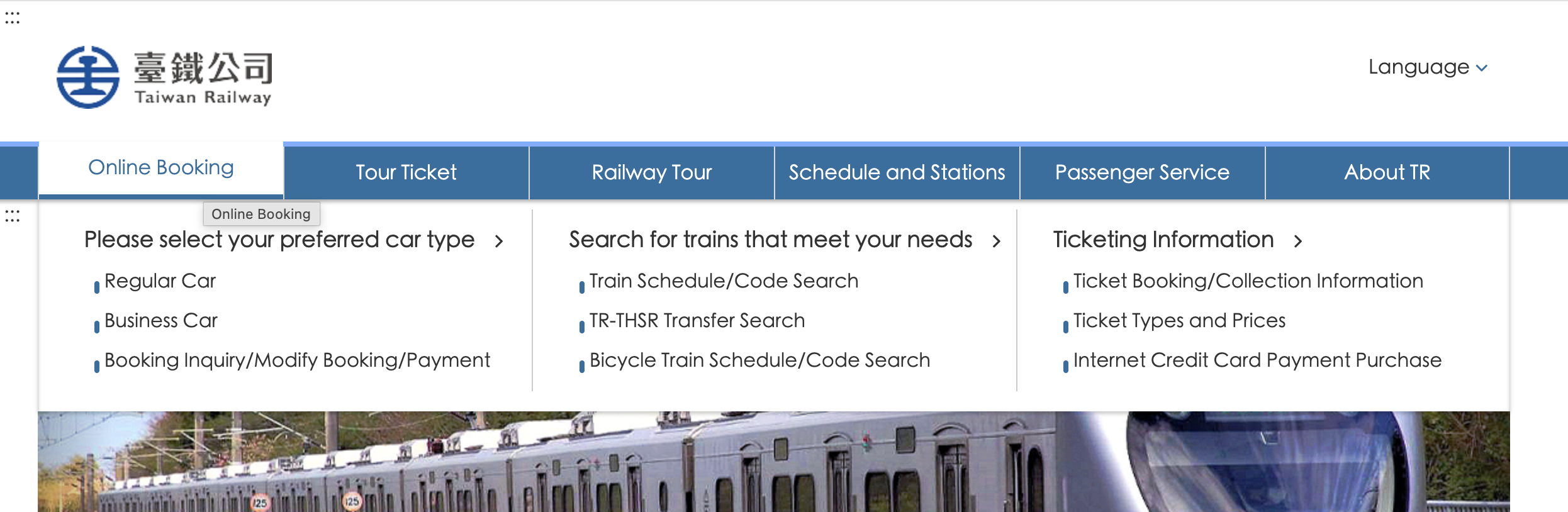
Taiwan Railway online booking
Option 1: Official Taiwan Railway website
Go to the TRA site, hit “Online Booking,” and start your reservation.
You’ll choose your train type, route, date, and seats, and enter your passport or Taiwanese ID info. Just double-check that ID number because fixing mistakes later is annoying (speaking from experience).
After payment, you can collect tickets at the station, through the app, or print them at convenience stores.
Option 2: Using a booking platform (a lot simpler)
This is what a lot of travelers end up doing.
Booking through Klook is clearer, checkout tends to be smoother, and you usually skip some of the confusing steps that you have to do on the official site.
If convenience matters more than navigating the official system, this option is worth checking first.
Taiwan Railway app (台鐵e訂通)
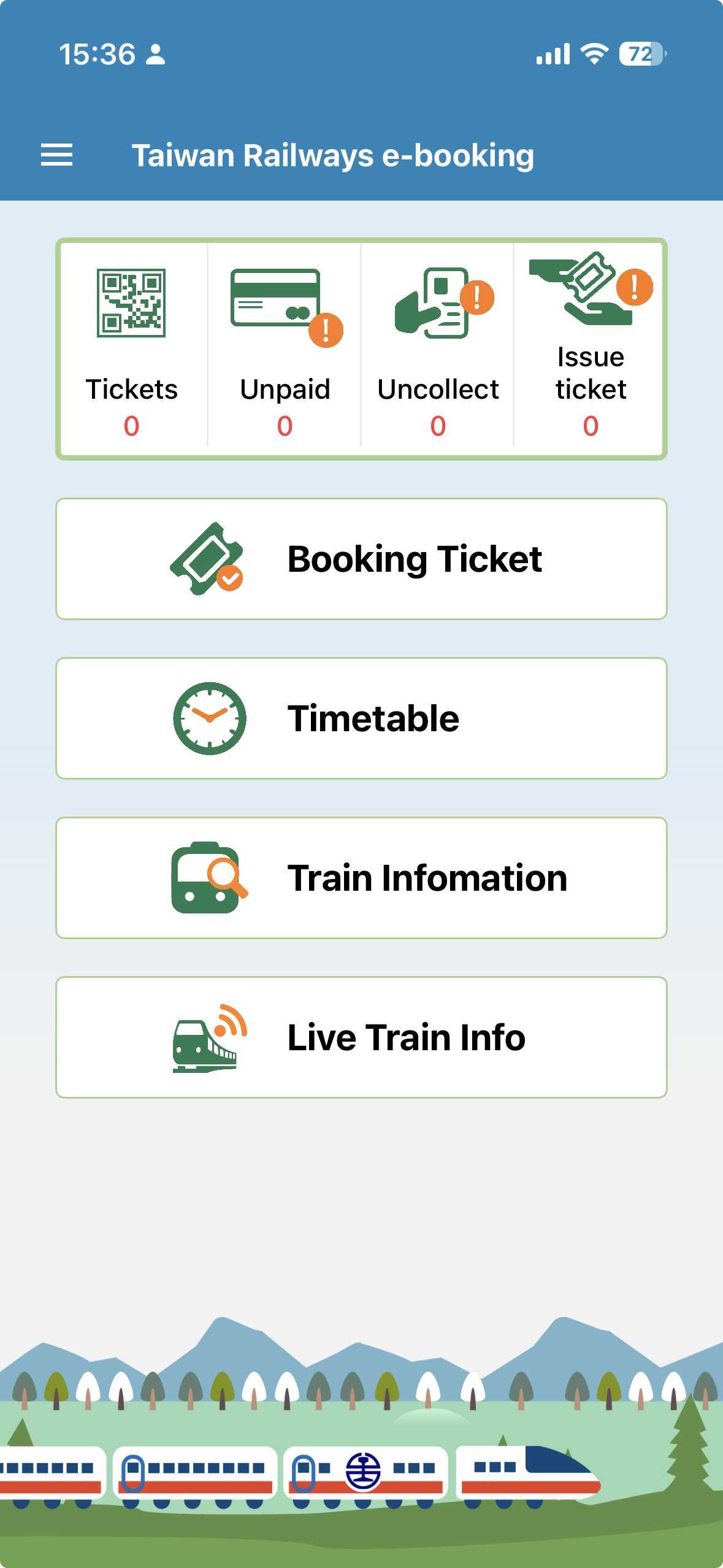
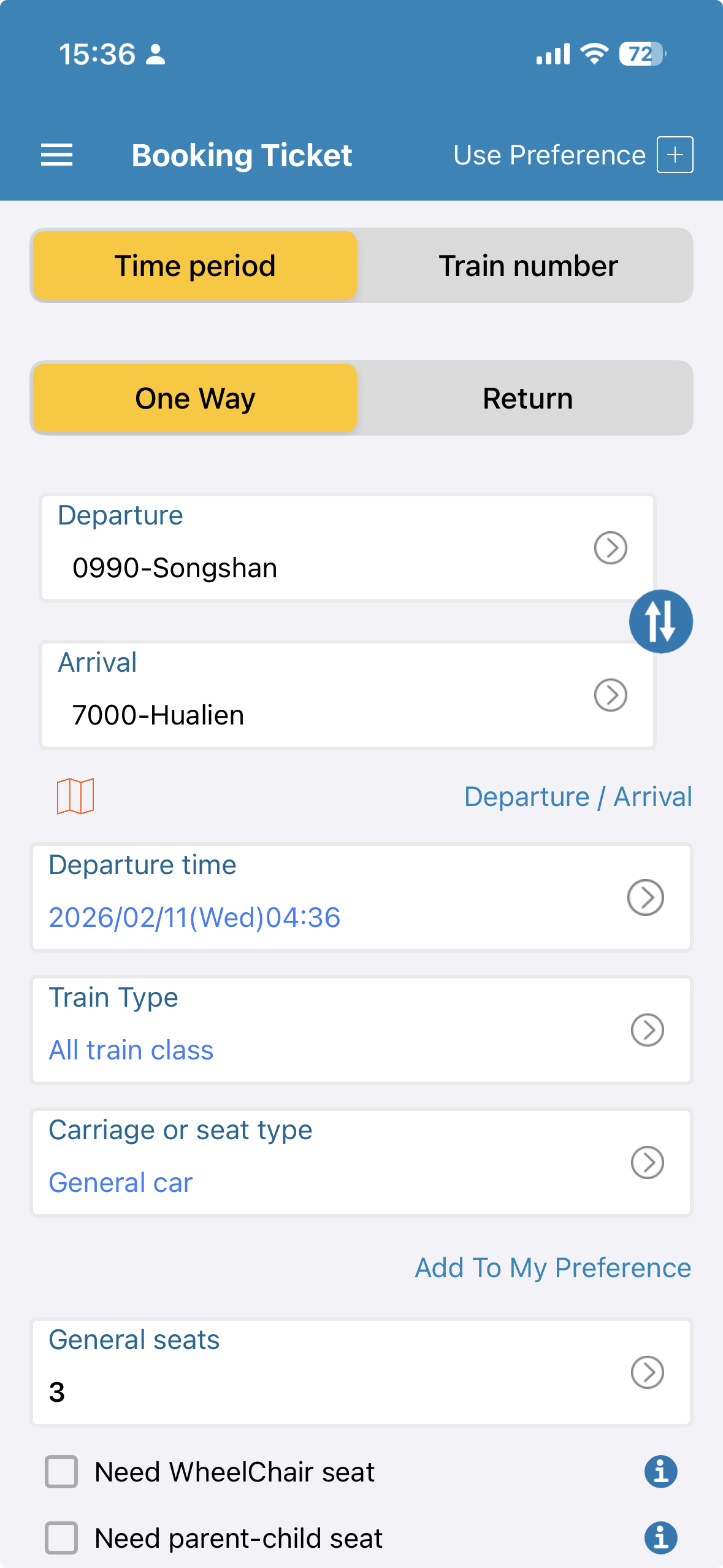
Taiwan Railway does have its own official app, and it covers the basics pretty well. You can book tickets, check timetables, view train info, and see live train status updates. There’s also a dropdown menu to change the language to English, Japanese, or Korean, which definitely helps if you’re visiting.
That said, I’ll be frank — the app feels a bit outdated and not very user-friendly. It works, but learning how to use it can be annoying if it’s your first time booking. Personally, I still find the website easier for initial ticket purchases, and then the app becomes more useful for checking schedules or storing tickets afterward.
Taiwan Railway overview
Regular car overview
When we rode from Taipei Songshan to Hualien, I was honestly surprised at how modern the train felt.
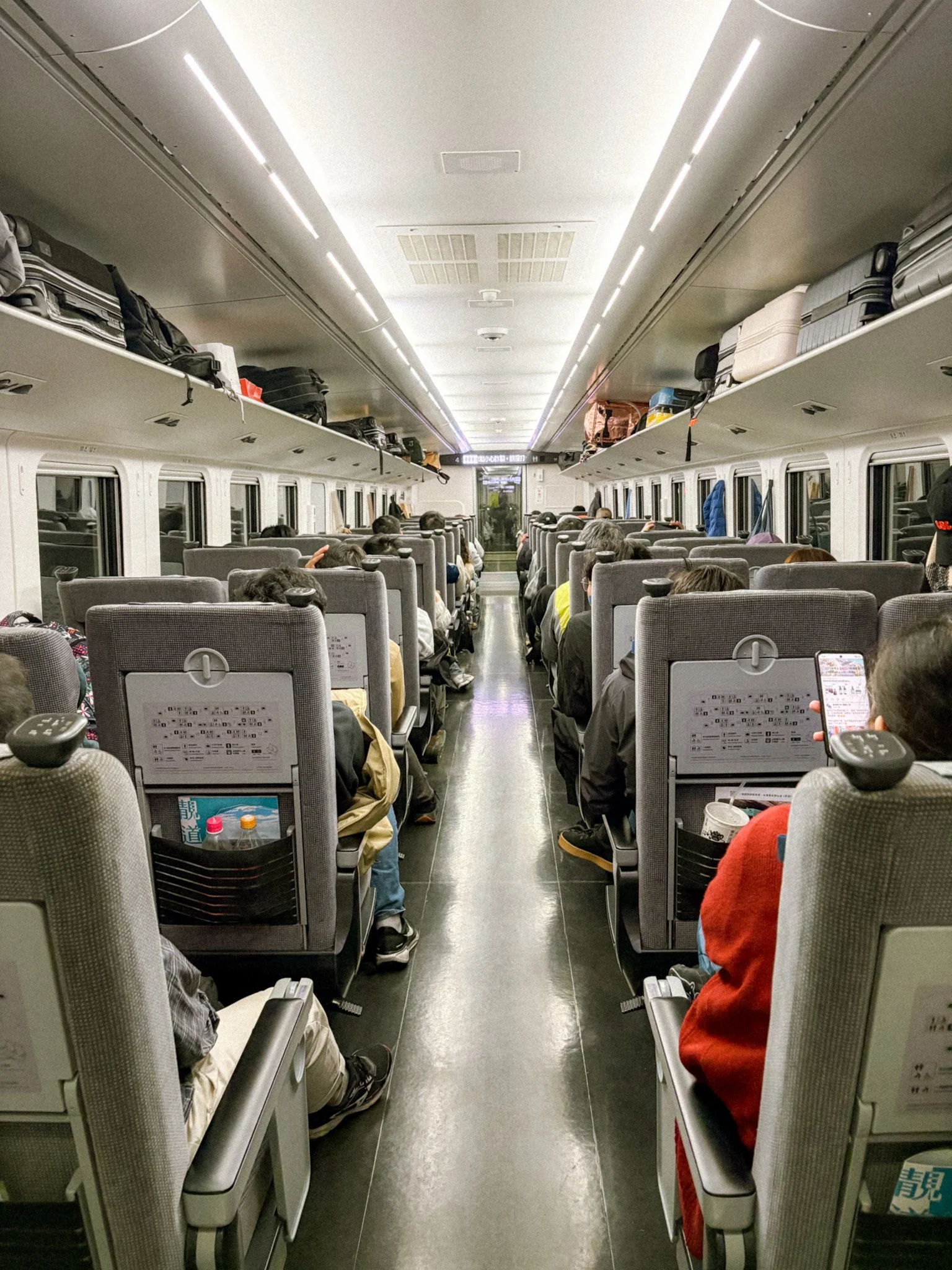
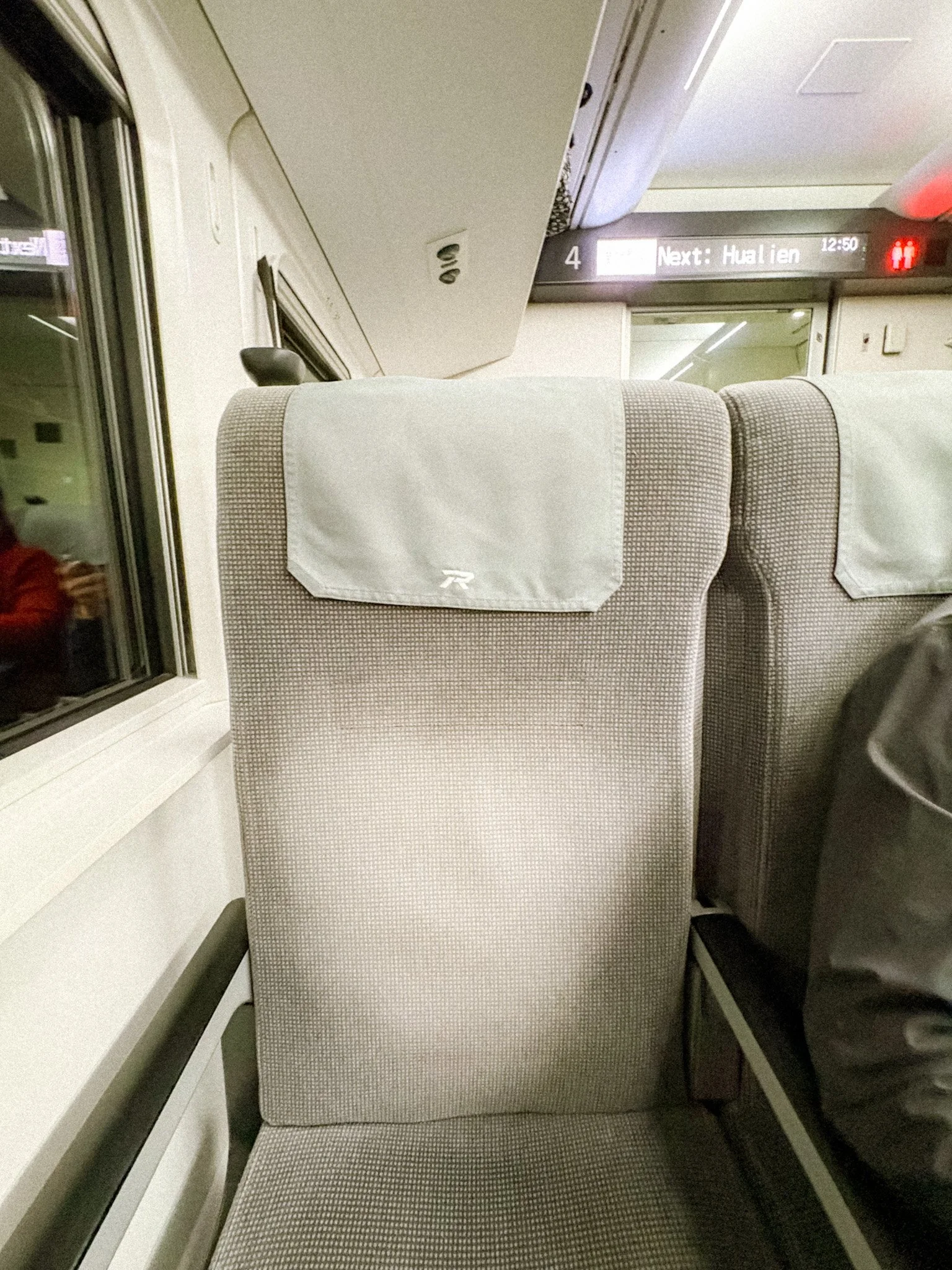
We previously rode a non-reserved train from Taichung to Chiayi, which was definitely much older and extremely crowded (we didn’t get seats because we didn’t understand the online booking), so I expected a similar experience — but the train we rode felt more like HSR, just a bit smaller.
Don’t expect WiFi, but the basics are covered.
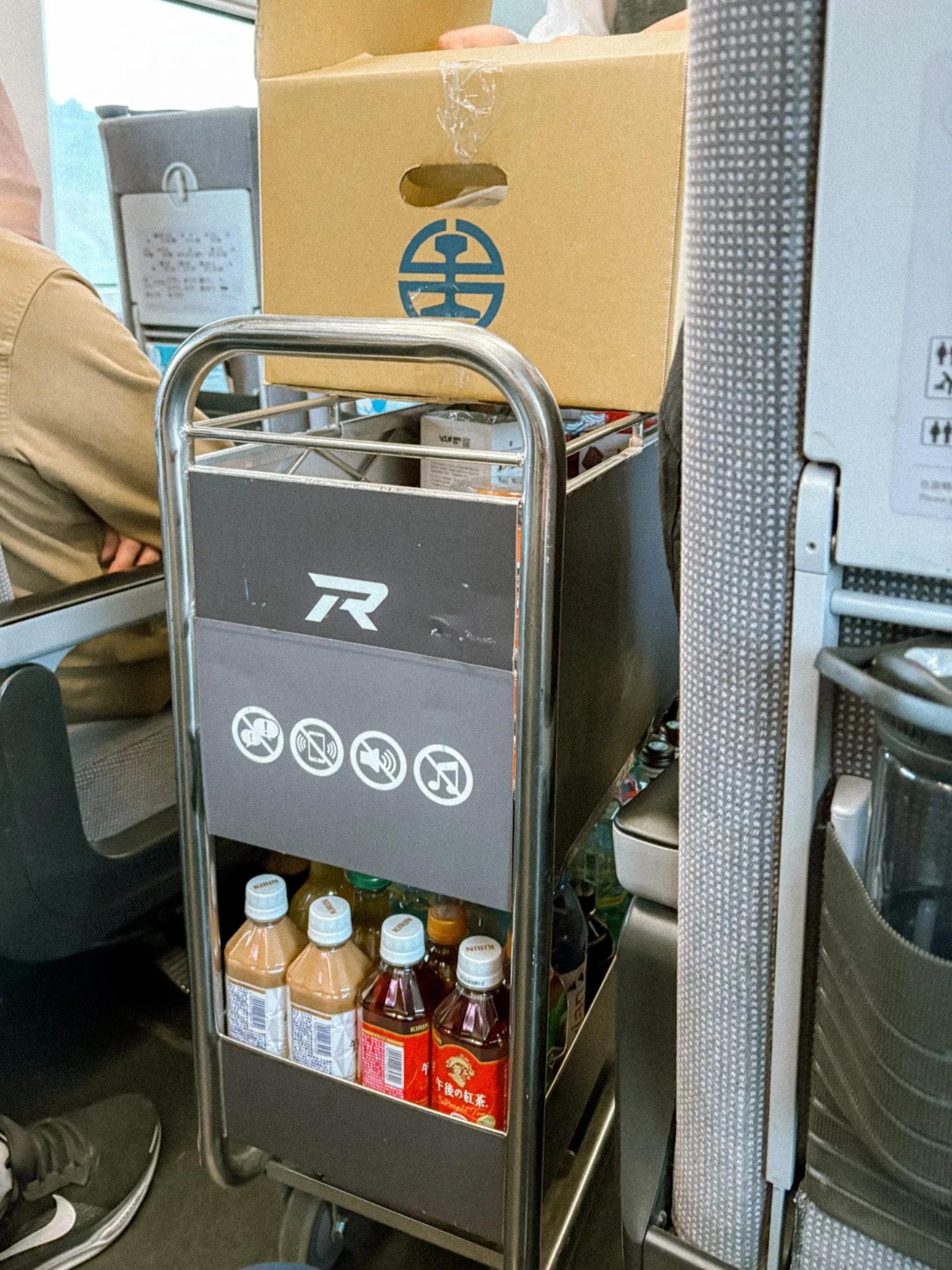
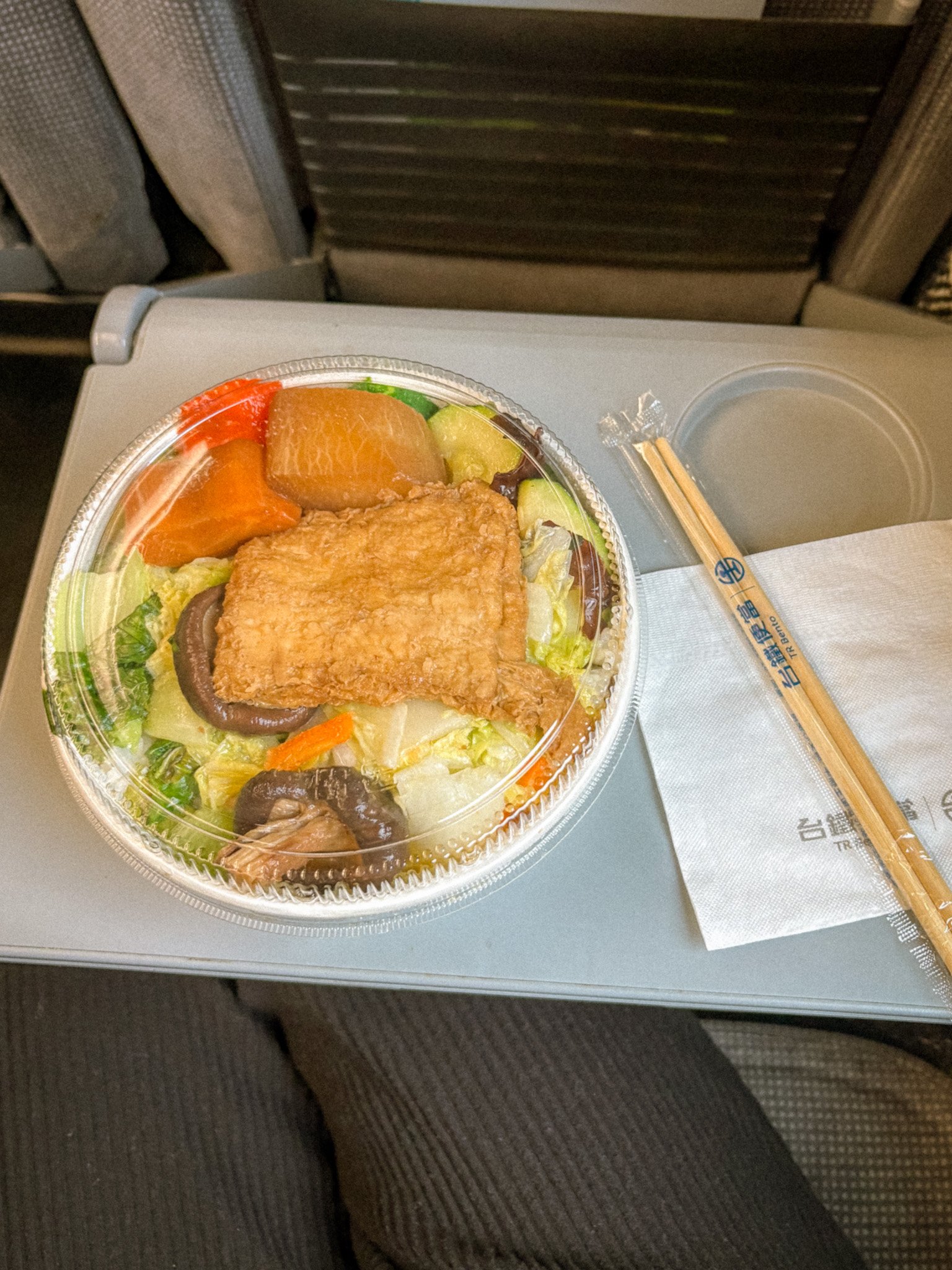
There are coat hooks, tray tables for food (which you can bring your own lunch or buy lunch on the train, or even pre-buy them online, which is what we did, and usually someone comes by with a trash bag so you can toss your containers. If you miss them, there are trash bins near the bathrooms, so definitely clean up before leaving.
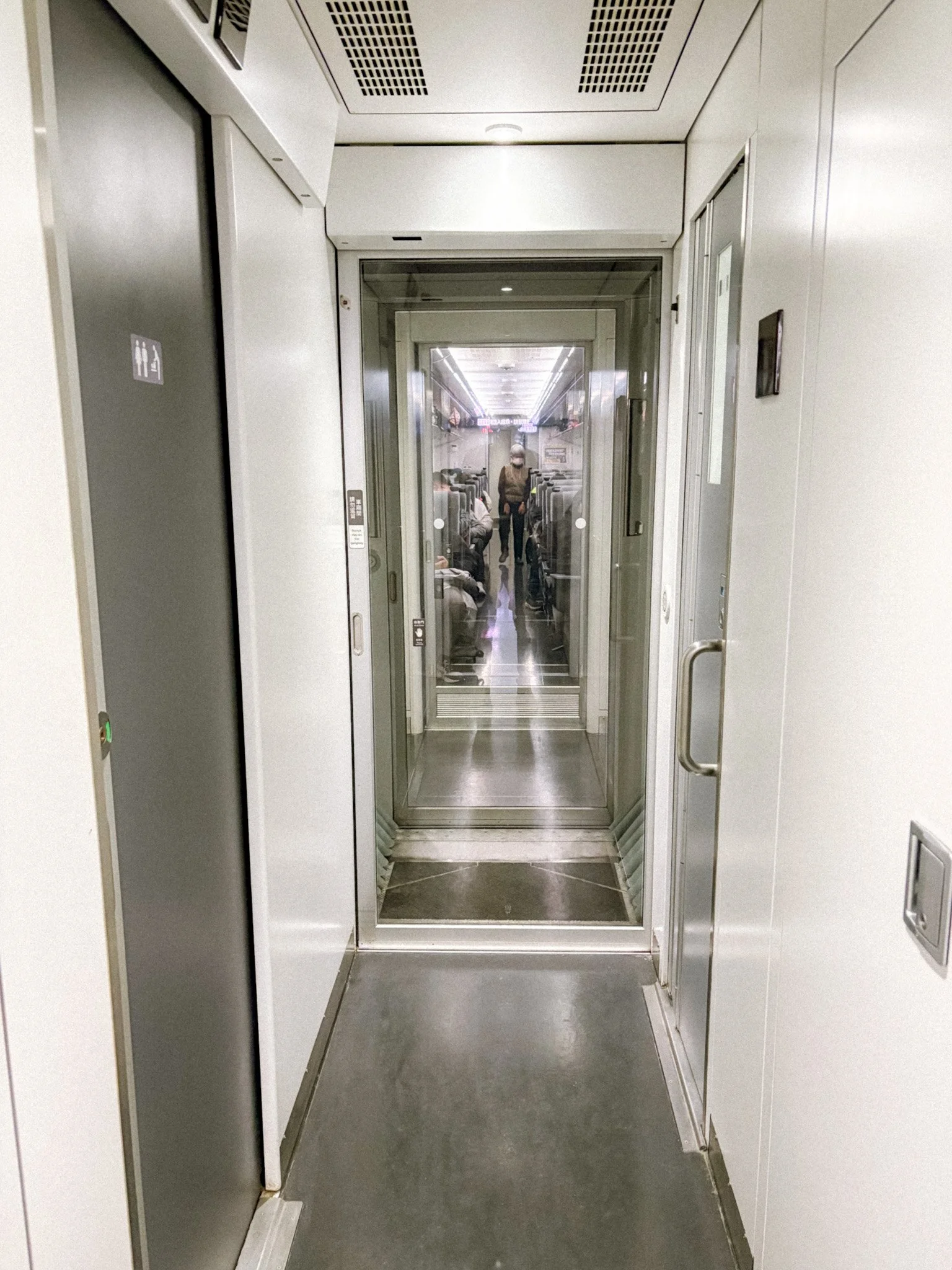
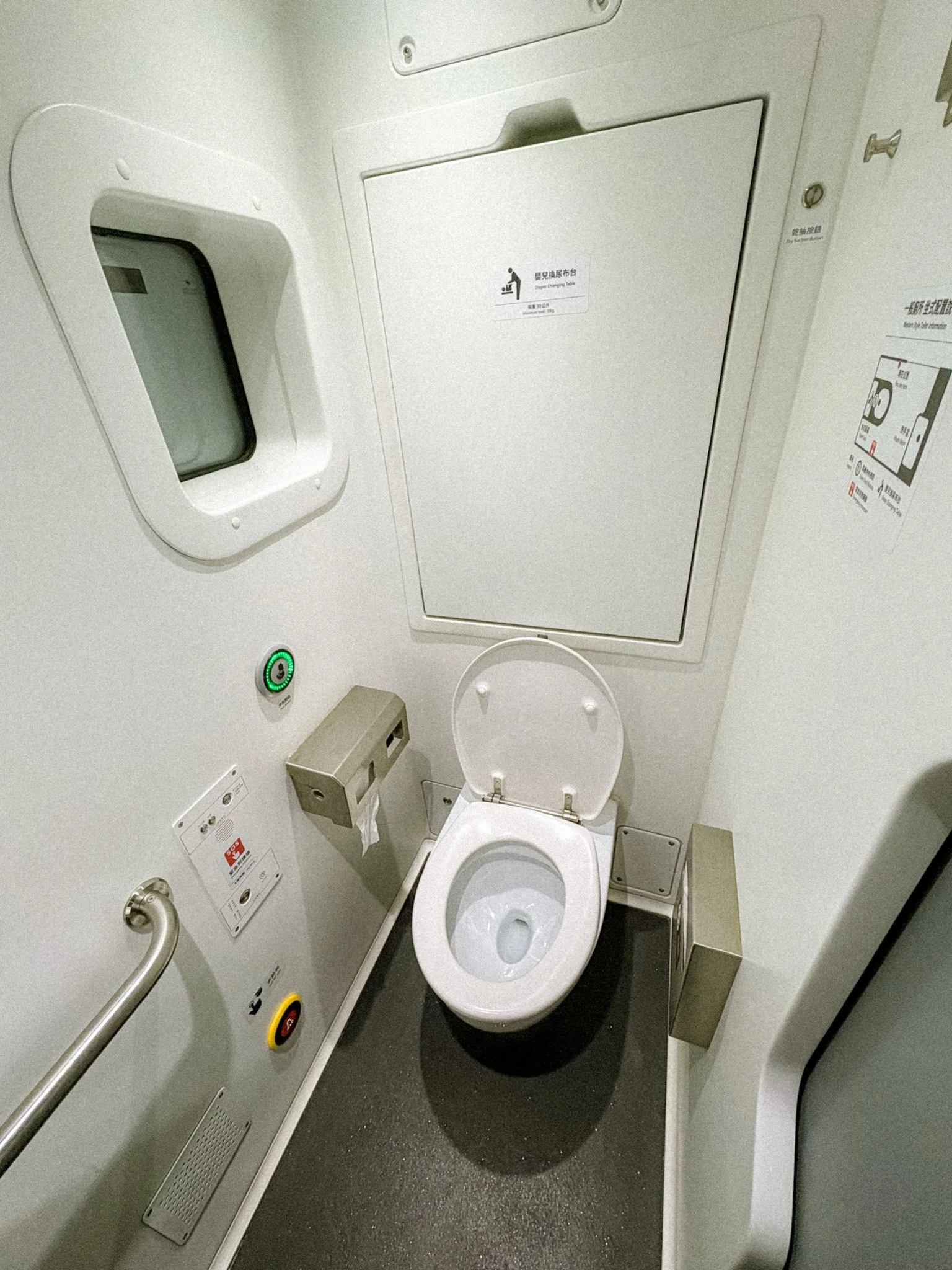
And yes, there’s a clean bathroom, which I was actually expecting to be dirty, but wow, it was quite clean!
Overall, it’s comfortable, practical, and way less intimidating once you’ve done it once.
know before you ride!
🍽️ BENTO BOX OPTIONS | Usually vegetarian/vegan or the classic pork-chop bento. Definitely worth trying at least once — it’s part of the Taiwan train experience.
🚫 LOCATION ETIQUETTE | Dispose of your own trash and raise seats back upright before leaving. Basic courtesy, and locals really appreciate it.
💳 PAYMENT | Credit cards are generally accepted for online bookings, which makes things easier for international travelers.
🐾 PET POLICY | Pets typically aren’t allowed onboard, so plan ahead if you’re traveling with one.
🚻 FACILITIES | Restrooms are available on most trains.
♿ ACCESSIBILITY | Wheelchair-accessible seating and spaces are available — just request them when booking.
final thoughts
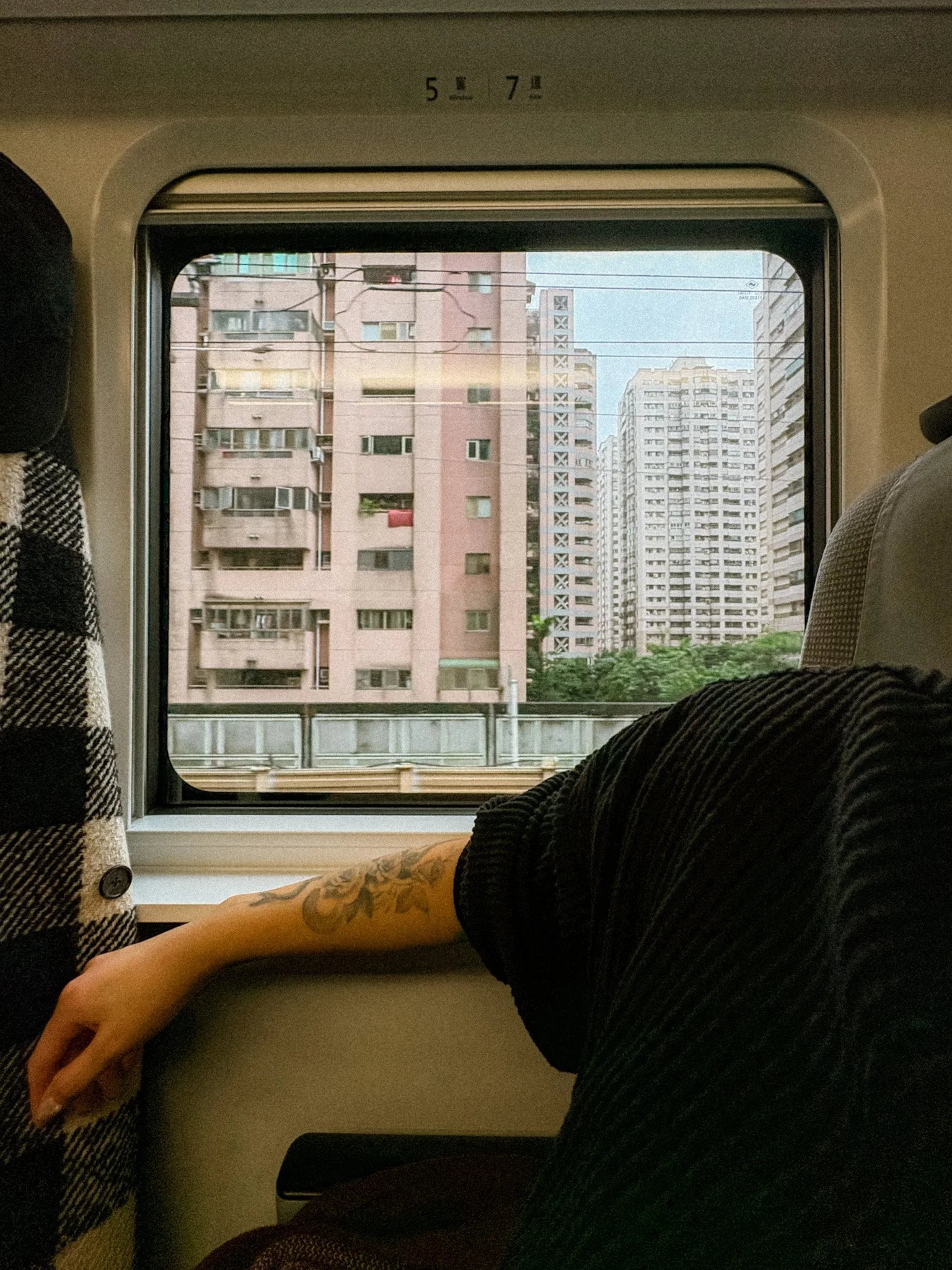
The Taiwan Railway can feel confusing at first — especially if you’ve never booked it before.
I definitely struggled my first time, and the website plus app don’t exactly make things intuitive. Train numbers, seat types, and booking flow can feel unnecessarily complicated unless you’re already familiar with rail systems.
But once you’ve done it once, it honestly becomes pretty straightforward. And the payoff is worth it — more destinations, scenic routes, and usually lower costs than HSR.
If you don’t want to deal with the learning curve, booking through a platform like Klook is totally fine. It reduces friction, skips passport-form headaches, and lets you often pick up tickets easily at the station.
Plus, having English (and other languages) options across platforms definitely helps make the whole process less stressful.
check out my Taiwan travel vlog!
DISCOVER MORE




01012026 12:45
Planning a trip to Sun Moon Lake? This guide covers must-see spots, where to stay, how to get around, and insider tips so you can experience Taiwan’s most iconic lake without the guesswork.